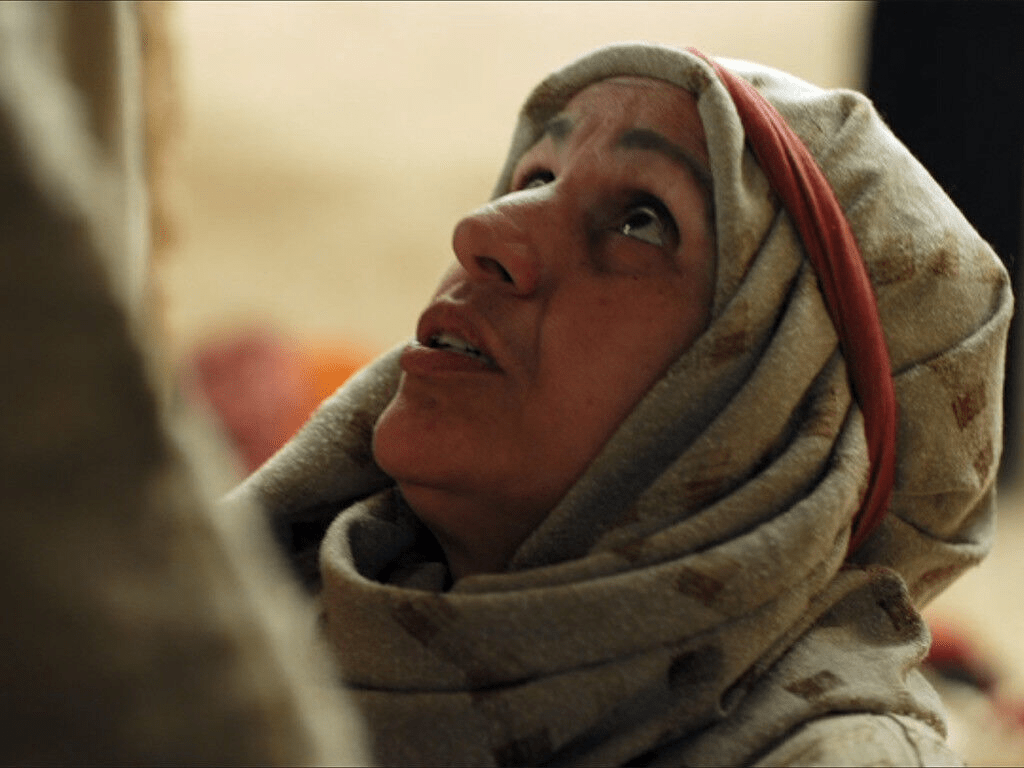
Meet the Master of Ceremonies in Cana

John 2:9-10

When the master of ceremonies tasted the water that was now wine, not knowing where it had come from (though, of course, the servants did), he called the bridegroom over.

10 “This is wonderful stuff!” he said. “You’re different from most. Usually, a host uses the best wine first, and afterwards, when everyone is full and doesn’t care, then he brings out the less expensive brands. But you have kept the best for the last!”

Full account: John 2:1-10

I really don’t believe in miracles. But something happened when I was overseeing a wedding in Cana that I can’t explain. I’ve thought a lot about it and as I uncovered some of the details–well, part of me believes, and part of me can’t.

My duty was to oversee the details that are part of every wedding. That includes having a sufficient source of wine for the party. If I made a mistake or miscalculated the thirst of the guests, it’s the absolute worst thing I could do. Not too much wine (as it could be expensive) or not too little either. If I blew it, it would go down as a shameful thing.

Essentially I freed up the bride and the groom so they could enjoy their day–I handled all of the logistical stuff. It was my ministry you could say, I had a knack for managing these events, it was how I made my living. (It’s all about having a good reputation, and I suppose the shekels were also a part of my thinking too.)

This particular wedding in Cana sort of got out-of-hand.

Too many guests too soon, and man were they thirsty. I brought in the wine, and it wasn’t enough–I was blowing it, and honestly, I really didn’t know how I was going to extricate myself and avoid this incredible goof. Word was spreading fast; we were running out. (People were starting to panic!)

My employees, my servants, gathered around to help me think. They basically gave me the news, and they expected me to do what was out of my power to do. I rarely had encountered a predicament like this. Poor planning on my part and now the groom would take the rap.

I was surprised when the servant came with a cup for me to sample!

Tasting that wine I realized then and there that this was not the usual plonk–as a matter of fact, it was the best that could be found (and I know all about wine, believe me). When I found the groom and told him…”Most serve the best at first, but you rascal, you saved the very best for last!”

I was dumbfounded when I investigated its source. It was water, coming from six purification jars (each one could hold up to 30 gallons). Each one was filled to the brim, and each one became excellent wine. Some have told me that Jesus didn’t add anything–but He transformed it. Now dear reader, perhaps I understood the incredible power of Jesus.

I’m not really a believer quite yet, but maybe?

I suppose that this miracle describes having a life that’s being transformed. As we grow we start to realize that He’s taking us higher up and deeper in. Look for your next step, there’s always much more in “becoming.”

And we all, who with unveiled faces contemplate the Lord’s glory, are being transformed into his image with ever-increasing glory, which comes from the Lord, who is the Spirit.

2 Corinthians 3:18, NIV

Art by Paolo Caliari, (1528-88). Scripture is from the Living Bible, by Tyndale House.
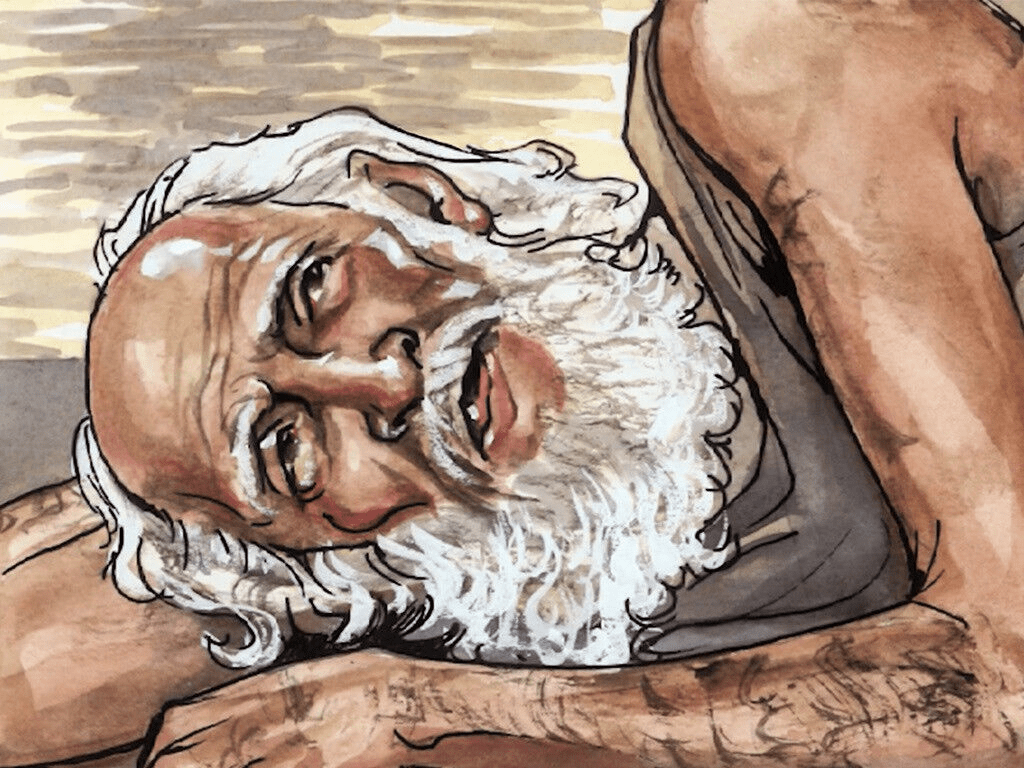
Meet the Man at the Pool

John 5:1-9

1-6 Soon another Feast came around and Jesus was back in Jerusalem. Near the Sheep Gate in Jerusalem there was a pool, in Hebrew called Bethesda, with five alcoves. Hundreds of sick people—blind, crippled, paralyzed—were in these alcoves. One man had been an invalid there for thirty-eight years. When Jesus saw him stretched out by the pool and knew how long he had been there, he said, “Do you want to get well?”

The sick man said, “Sir, when the water is stirred, I don’t have anybody to put me in the pool. By the time I get there, somebody else is already in.”

8-9 Jesus said, “Get up, take your bedroll, start walking.” The man was healed on the spot. He picked up his bedroll and walked off.

9-10 That day happened to be the Sabbath. The Jews stopped the healed man and said, “It’s the Sabbath. You can’t carry your bedroll around. It’s against the rules.”

There were hundreds of us, surviving in our own personal man-made hell. We were the blind and the lame; simply dropped off by our families here to exist, to somehow make it on our own. We were a desperate lot, but there was a strange camaraderie, we all understood that our condition was hopeless. We were just marking time–and my 38 years was a lifetime for some. It’s a very long time to be sick.

None of us were whole, not by a long shot, otherwise, why were we sitting here waiting to die?

It’s said by some that an angel would venture down from heaven, and stir the pool–and the first to get in the water would be healed. It was one of those strange things that kept us from going crazy–a mental mechanism that bruised hearts often carry deep inside. It was a necessary way to keep from being lost.

I lived with my friends on these hard stone steps all these years, I’ve seen some live, and many more die. Banding together we became a community of survivors. We understood each other, and we knew everyone’s story–what else was there to do but talk?

It’s funny how some ideas get started–a silly dream, or a fairy tale of leaving this pool and becoming normal again. We developed the knack of a gallows kind of humor, a bond that condemned men shared with each other. We bantered these in order to cope with this slow-motion death. These were inside jokes, mixed with hefty dollops of half-believed hope and odd humor that only dying men learn to appeciate.

But maybe it kept us alive for just one more day. Perhaps it helped us to survive this hell.

That day started like 13,879 days before, and there was nothing unusual about it. There was nothing but the growing heat, the flies, and the sour smell of unwashed bodies. But in an instant, my life was going to be decisively interrupted. And at the time I never saw it coming.

Jesus threaded His way through the sitting bodies to find me.

When our eyes met he stopped. All He did was to ask me simply— “Do you want to be made well?” That question cut through the many years of accrued pain. I mumbled something about the angel, and the pool, and not having anyone to help me into the water. His question pretty much unraveled me. It seemed like it was just Him and me, staring at each other.

He told me to stand, to pick up my mat, and walk.

All of those half-baked days of a wasted life crashed in on me then. I saw all the emptiness and sadness of 38 long years. But in an instant, He healed me. I stood and picked up my mat, I shook my head and cried. Through my tears, I saw my friends looking at me in shocked and total amazement.

I simply walked out of there, carrying the only thing I owned.

“Then the lame will leap like a deer,
and the tongue of the mute will sing for joy,
for water will gush in the wilderness,
and streams in the desert.”

Isaiah 35:6, CSB

Art: Free Bible Images, text used is from The Message, a translation by Eugene Peterson

Meet the Man Born Blind

John 9:1-7

As he was walking along, he saw a man blind from birth.

“Master,” his disciples asked him, “why was this man born blind? Was it a result of his own sins or those of his parents?”

“Neither,” Jesus answered. “But to demonstrate the power of God. All of us must quickly carry out the tasks assigned us by the one who sent me, for there is little time left before the night falls and all work comes to an end. But while I am still here in the world, I give it my light.”

Then he spat on the ground and made mud from the spittle and smoothed the mud over the blind man’s eyes, and told him, “Go and wash in the Pool of Siloam” (the word Siloam means “Sent”). So the man went where he was sent and washed and came back seeing!

Up to now I’ve tried to approach these posts from the first person viewpoint. I hoped to understand those who met face-to-face with Jesus. I wanted to grasp what they were seeing through their own eyes. But I intend with this post to revert back to a more traditional approach to this passage.

First, we’re introduced to a man who is blind from birth.

I can’t even imagine what that would be like (just as he probably could imagine having sight). I’ve been told that he probably didn’t have a “dream” life–that requires having seen images (a dog, a tree, a mean person) and this wasn’t available to him. He never saw the color red, or seen a mountain. (He didn’t have the circuitry.)

I suppose we can only imagine what blindness like this would be.

Somehow I’ve come to an idea that this represents fallen men–we’re spiritually blind to the workings and truths of Jesus’ Kingdom. It seems a pretty good explanation of each of us–“blind from birth.”

Secondly, notice the response of the disciples who first met this unfortunate man. They don’t see his needs, rather they want to know the theology behind this. Perhaps that’s how we respond much of the time–we don’t see the needs, we only want to know the reasons. We’re not wise or discerning enough to see what’s going on–in short we’re not equipped to love or show mercy. (We haven’t got the circuitry.)

Perhaps this is how we operate as immature Christians.

We don’t engage the need, but rather we like having great theology over understanding compassion. If we really don’t love needy people, we miss so much. We don’t ever grow up. It’s easy to philosophize–it’s hard to get down and serve and really love others.

It’s funny but Jesus declares Himself to be the light of the world while speaking to the man who is born blind.

Third, we discover the gentle mercy that Jesus has when He meets needy people. Now the Lord does accommodate His followers, but not at the expense of engaging the need of the moment. Jesus is full of compassion–most especially when He meets broken people–and as His followers, we must grasp this.

Good theology is not the primary calling of Jesus’ followers.

As I mature in Christ I’m learning (slowly) that people are His real focus. He has come, not to theologize or philosophize, but to meet needs! Sure the reasons why become clearer, but that really isn’t Jesus’ primary goal. People are, not having impeccable theology.

Classes in systematic theology are good, but soup kitchens are better.

The miracle happens, and Jesus’ love and desire to restore this man is ‘front and center.’ The Lord’s methodology is interesting. Spit and mud, wiped on the blind man’s eyes. In Genesis we discover that God made man out of dirt and dust of the ground. Perhaps what He’s doing here mirrors that work.

And it’s also important to understand that Jesus never performs the exact same healing in the exact same way. For some reason He ‘tailors’ His work to the individuals deepest need. I suppose He doesn’t want us to grab a hold of a formula, as that’s what we want to have.

The story is primarily about a blind man’s healing.

It’s not theology, and it certainly isn’t about what is proper and acceptable. We really must understand this, and we really need to understand the tremendous mercy and power of God to both heal and restore.

There’s a ton more here we can extract, but I suppose there isn’t time. This is merely my take on John 9.

The Spirit of the Lord is upon me; he has appointed me to preach Good News to the poor; he has sent me to heal the brokenhearted and to announce that captives shall be released and the blind shall see, that the downtrodden shall be freed from their oppressors, and that God is ready to give blessings to all who come to him.”

Luke 4:18

Image: MCCC. Text from the “Living Bible,” published by Tyndale House

Meet the Gentile Woman

Matthew 15:21-28

Jesus then left that part of the country and walked fifty miles to Tyre and Sidon.

22 A woman from Canaan who was living there came to him, pleading, “Have mercy on me, O Lord, King David’s Son! For my daughter has a demon within her, and it torments her constantly.”

23 But Jesus gave her no reply—not even a word. Then his disciples urged him to send her away. “Tell her to get going,” they said, “for she is bothering us with all her begging.”

24 Then he said to the woman, “I was sent to help the Jews—the lost sheep of Israel—not the Gentiles.”

25 But she came and worshiped him and pled again, “Sir, help me!”

26 “It doesn’t seem right to take bread from the children and throw it to the dogs,” he said.

27 “Yes, it is!” she replied, “for even the puppies beneath the table are permitted to eat the crumbs that fall.”

28 “Woman,” Jesus told her, “your faith is large, and your request is granted.” And her daughter was healed right then.

“Please Lord Jesus, there is no one else who can rescue me!”

I believe that Jesus must’ve come just for me. He had made a long trip to the Gentile cities of Tyre and Sidon to find me, a pagan woman, despised by the Jewish people. I mustn’t forget that. He came for me, he reached out for my daughter and myself.

My daughter had a demon living inside her.

I knew this, and I also knew that no power on earth could rescue her–but Jesus could. I begged and I worshiped, I learned that this combination goes together like peas and carrots. You see, my daughter was possessed, filled with a satanic entity that was taking over to destroy her, I would do anything to set her free.

I was ‘blocked’ by Jesus’ followers, perhaps they didn’t understand. And yet I knew that they weren’t my obstacles, but I needed to push right through them–perhaps this is sometimes true of those who call themselves disciples. They wouldn’t let me see Jesus. And yet I had to bring her desperate need to Him.

There was no one else.

I begged and pleaded, and yet they refused me. Over and over I tried to see Jesus, to bring my terrible need to Him–the healer, the teacher—the One who worked miracles for undeserving people. I was coming to Him, not for myself but for my daughter.

It was then saw me. When He spoke it seemed that it was a hard word. He had been sent to the lost sheep of Israel, not to Gentiles like me.

But I didn’t stop pleading, I knew I was undeserving. I wasn’t righteous and I certainly didn’t belong. Trust me, I had no merit, no real right to come to Him. I had nothing, definitely not a holy life. I had zero and I knew it.

But I remembered my daughter, picking flowers and making ‘daisy chains.’ The way she used to be–she was innocent and so gentle. But recently something dark had taken over, and she had changed.

Jesus met me.

The words he spoke challenged me. “I’ve come exclusively for the children of Israel.” I understood, and yet I insisted–I fell down on my knees and saw His dirty feet; He had traveled very far. I began to worship Him. He seemed almost contemplative. “I don’t think it right to take what I can offer, and “give it to the dogs.'” But even then I insisted. He alone can heal her, there were no others.

I pleaded with Him, “even dogs can eat what falls off the table.” I may have stuttered. Jesus then spoke to me, and maybe the others. “I see that you have a large faith. I give you what you’ve asked.” And at that very instant my daughter was healed.

————————-

“Lord, help me.”

“I commend this prayer to you because it is such a handy prayer. You can use it when you are in a hurry, you can use it when you are in a fright, you can use it when you have not time to bow your knee. You can use it in the pulpit if you are going to preach, you can use it when you are opening your shop, you can use it when you are rising in the morning. It is such a handy prayer that I hardly know any position in which you could not pray it: ‘Lord, help me.’”

Charles Spurgeon

Art by Free Bible Images: the text is from the Living Bible

Meet Jesus’ Family

John 7:1-5

After this, Jesus traveled around Galilee. He wanted to stay out of Judea, where the Jewish leaders were plotting his death. But soon it was time for the Jewish Festival of Shelters, and Jesus’ brothers said to him, “Leave here and go to Judea, where your followers can see your miracles! You can’t become famous if you hide like this! If you can do such wonderful things, show yourself to the world!” For even his brothers didn’t believe in him.

To be honest, I didn’t believe He was the Messiah. I simply couldn’t accept that he was the Chosen one, predicted in the Scriptures. Really now, Jesus? Our older brother? Was he the one we were all looking for? Was he the one who would save Israel? He was family, and we saw Him eat, drink, sleep. I for one didn’t believe it.

We played with him in the streets.

We ran, played ball, and raced donkeys. We sat with him around the fire when the storytellers came. We had fun dancing–(with our sisters of course). When we weren’t working in the shop, carrying water, and helping out, we found lots of things to do, and Jesus as the oldest was the one who came up with many of our adventures.

But to say that he was the one who was prophesied about in the book of Isaiah seems ludicrous. To be very honest, our father was just a poor carpenter–we lived hand-to-mouth, much like any other family in Judea. We wore Jesus’ hand-me-downs, and when he outgrew his sandals, guess what?

Looking back at it all, the whole business of him being the Messiah seemed like a sad and silly joke.

Our father and mother seemed privy to some sort of secret, but we kids never could get the whole story from them or others. Our cousins knew something, but no one was talking, and I suppose we never really pursued it. Maybe it would’ve helped, and again maybe it wouldn’t.

Our lives rotated around the Temple and the synagogue. A Sabbath day was part of our religious upbringing, and we listened to the rabbis and Pharisees as they taught. Jesus had a tremendous knack at grasping these things, and yes, he did know the Scriptures and the various interpretations that the leaders gave.

Each of us boys had the mitzvot ceremony at the age of 13.

We were told that we were now responsible before God for our own lives after this ceremony took place. This was normal for each of us. And apparently, even for Jesus, there was nothing special about it–no lightning, no doves coming down. Like I said before, it all was very normal. We were normal people trying to survive in normal Judea.

Now, this is where it gets interesting.

When Jesus was around 30 we heard that he had been baptized by our cousin John. We later heard that he started to teach and preach to any who would listen. He gathered disciples who followed him from town to town, sleeping and eating in the countryside, or wherever things opened up. I was told by many that his teaching was brilliant and authoritative.

When we started to hear of his miracles, it didn’t make any sense.

Honestly, it seemed something happened directly after his baptism–something that was hardly normal. As his brothers and sisters, we tried to process it with each other. At that time we finally came to the conclusion that Jesus was losing it. Maybe he was or at least very close to it. I remember at least twice we came to take custody of him. That was hard.

Was Jesus orthodox, did he have the Pharisee’s ‘stamp of approval?’ After so many reports of healings and exorcisms, we thought that having that could help. I remembered then that we wanted him to reveal his ministry through the proper religious channels. For ourselves, we didn’t believe he was who he claimed to be, but we desperately wanted him to be safe.

When they arrested him and gave him a trial it was a shock to us all.

And when they ordered his death by crucifixion we were deeply troubled and ashamed. Only criminals died that way. Did Jesus deserve to die like this?

But then something quite startling was said to have happened–we were told that he rose from the dead! I remember the shock; maybe these resurrection reports were being made up by those with deluded hopes. We really didn’t know, but we did wonder.

Who was he really? Who was our older brother exactly?

He replied to the one who was speaking to him, “Who is my mother and who are my brothers?” Stretching out his hand toward his disciples, he said, “Here are my mother and my brothers!

Matthew 12:48-49

[Two of Jesus’ brothers that we know of became believers, they went on to write the book of James and Jude.]

Those Strange Christians

I was thinking about this today.

Do you have any idea how ridiculous unbelievers must see us? Just imagine for a minute that you’re on the outside of faith looking in.

———————

They get very solemn as they slowly take the bread and wine. They say that when they sing it’s to God Himself. Some get loud raising hands in surrender to Him. Some will even dance in the worship of someone who’s invisible. How bizarre is that?

They call a man who died a long time ago, Lord and Master.

They gather to read from a special and “magical” book, that they say speaks to them. They talk about being a living a life separated to Him. They truly think that others need to join them in this silly group. They regard each other as brothers and sisters and they serve each other.

They tell us that Jesus is God in human flesh, who was put to death on a cross is now alive. They also believe that His blood saves them from their “sin.” These very odd ones think this man is going to return and rule the world, physically bring the Kingdom of God to this planet.

How very odd of them. How very strange these Christians are.

—————————

There exists a letter written to Diogenes, who is known as the Cynic. It was written around 130 AD. This letter itself is fairly extensive. I suggest that you read it in its entirety. It describes the faith and beliefs of the Christian to a man who really has no idea about them but wants to understand–here is a small portion of this epistle. Remember that this is one of the very first observations of our Faith:

“They live in the flesh, but they are not governed by the desires of the flesh. They pass their days upon earth, but they are citizens of heaven. Obedient to the laws, they yet live on a level that transcends the law. Christians love all men, but all men persecute them. Condemned because they are not understood, they are put to death, but raised to life again. They live in poverty, but enrich many; they are totally destitute, but possess an abundance of everything. They suffer dishonor, but that is their glory.” 

Meet the Older Brother

Luke 15:25-32

25-27 “All this time his older son was out in the field. When the day’s work was done he came in. As he approached the house, he heard the music and dancing. Calling over one of the houseboys, he asked what was going on. He told him, ‘Your brother came home. Your father has ordered a feast—barbecued beef!—because he has him home safe and sound.’

28-30 “The older brother stomped off in an angry sulk and refused to join in. His father came out and tried to talk to him, but he wouldn’t listen. The son said, ‘Look how many years I’ve stayed here serving you, never giving you one moment of grief, but have you ever thrown a party for me and my friends? Then this son of yours who has thrown away your money on whores shows up and you go all out with a feast!’

31-32 “His father said, ‘Son, you don’t understand. You’re with me all the time, and everything that is mine is yours—but this is a wonderful time, and we had to celebrate. This brother of yours was dead, and he’s alive! He was lost, and he’s found!’”

I hated him. I know I shouldn’t but I did. He betrayed all of us by his nonsense. It all started when he demanded that our father immediately divide up our inheritance. Strange I know. It was a shock, like a punch in the stomach. No one knew what to say, it was so bizarre. I have no idea where this idea came from.

He insisted that we divide things up right this instant. He didn’t have the decency to wait for our father’s funeral. It was such a shameful thing that I couldn’t begin to tell you how mortified I was. No one ever heard of anything happening like this before. Even now, after these many years, I can hardly talk about it.

My father simply did what was asked, there was no argument, no resistance.

The property was appraised, and the money was divided up according to custom. We sat at the kitchen table, and the ass watched to make sure that he received every penny that was coming to him. His hungry greed was beyond belief. He oozed arrogance–it was then I really began to hate him.

Never ever had I been so angry and ashamed.

My younger brother never even batted an eye and my father simply did what was asked. My brother didn’t even have the decency to say “thank you.” I desperately wanted to leave, and I couldn’t. I had to be there, and I felt like I was going to throw up.

Enough of that. Let’s move on.

That ass, my younger brother packed up and left. Occasionally I heard of his escapades. There were awful reports of his drunkenness and whoring. He was spending our father’s money as if it would never going to run out. Even talking about it now makes me angry.

The last I had heard was he was now feeding pigs. He had spent every last dime and now it seems he was getting what he deserved. I didn’t shed a tear, I felt no pity. Good, he was getting what he should of gotten all along. I only wished that things would get even worse.

Coming in from the fields I heard a raucous party coming from the house.

I asked one of the servants what was going on. When they told me I was even more shocked. Our father had arranged a celebration, all because my brother had returned. The fatted calf had been killed, the one that was saved for parties, and I heard shouts of joy and dancing. They were celebrating, and that made no sense to me at all.

I had served the estate faithfully, I had sweated to make things work, and I never got a party like this.

My father came out to find me, I had hid out in a shed–I didn’t want to be a part of this awful charade. When he found me he said that the party had to happen. It seems the scoundrel had the audacity to return–the money was spent, and apparently, he came home in rags–it served him right. He got what he deserved.

He told me about the necessity of this celebration.

My mind reeled. Could things get even crazier? Never had I heard of anything so bizarre. It was beyond belief. My father wanted me to come in and join them; I’d rather die. You have no idea.

He kept telling me that this had to happen–apparently he was given a new robe, and worst of all he was given the family ring, the ring that declared that he was now a full-fledged son, someone who could have all of the privilege and authority of a son. I had never heard of such foolishness.

My father said this was necessary, that my brother who I hoped was dead, was now alive.

How bad could things get? Perhaps my father had lost his mind.

“Just so, I tell you, there will be more joy in heaven over one sinner who repents than over ninety-nine righteous persons who need no repentance.”

Luke 15:7

Painting: “The Return of the Prodigal Son by Rembrandt, c. 1667, oil on canvas. This picture shown is a small part. Scripture is The Message, a translation by Eugene Peterson.

Meet Thomas

John 20:25-29

But Thomas, sometimes called the Twin, one of the Twelve, was not with them when Jesus came. The other disciples told him, “We saw the Master.”

But he said, “Unless I see the nail holes in his hands, put my finger in the nail holes, and stick my hand in his side, I won’t believe it.”

Eight days later, his disciples were again in the room. This time Thomas was with them. Jesus came through the locked doors, stood among them, and said, “Peace to you.”

Then he focused his attention on Thomas. “Take your finger and examine my hands. Take your hand and stick it in my side. Don’t be unbelieving. Believe.”

Thomas said, “My Master! My God!”

Jesus said, “So, you believe because you’ve seen with your own eyes. Even better blessings are in store for those who believe without seeing.”

The others had told me that they had seen Jesus. But this couldn’t be. Either they imagined it or they saw His ghost. I saw him brutalized, crucified, and buried, and I knew He was really dead. I was never into pretending, or wish fulfillment. No, not me. When you’re dead, you’re dead. (At least that’s what I thought.)

I remember telling the others that I would only believe them if I could see and feel the scars–the nail holes and the hole in his side. I needed proof, something tangible or solid before I could believe their stories. Part of me hoped it was so, but I honestly couldn’t join the others in their excitement.

Some would call me a doubter–a skeptic.

And maybe I was, but a realist is how I would describe myself. To go along with the others wasn’t going to cut it. They said that they had seen Him and He was very much alive, that somehow, someway He was now resurrected. But for me, I couldn’t believe it. I myself must know it for myself.

Was Jesus alive after all they had done to Him?

We had all gathered in a large room. The door had been locked–we were afraid that the authorities would come for us next. In spite of the confinement, we had some good fellowship that Sunday morning, catching up and sharing stories of the last three years, thinking about all the things Jesus had taught and done.

And suddenly Jesus showed up. Trust me on this if you can–the door was locked, and there was no other way to get in. When Jesus “dropped in” we were completely amazed. He was very much alive–and how can this be? We were all in shock as He stood right in front of us!

Immediately Jesus looked at me, and I looked back–and it was really Him!!

Jesus immediately focused on me, He asked me to come close; He wanted me to touch Him, to inspect and see for myself that He was as real as you or I. He asked me to come and see the nail prints in His hands, and stick my hand in the hole where the Roman soldiers had thrust a spear into His side.

And I was completely undone.

It was really Him, and I couldn’t explain it away. Jesus was real flesh and blood! In a second I went from doubt to faith. How He knew that I had voiced my hesitation out loud I didn’t know. But I now knew for certain Jesus was very much alive. Death was now dead.

“My Master! My God!” was all I could say.

At that moment I became a believing believer. It wasn’t second-hand anymore; I wept and laughed at the same time! I couldn’t explain it, I must believe it. Jesus had overcome death and He was now commanding me to believe.

Immediately I knew, I saw Him for myself.

Looking back I admit my foolishness and doubt; Jesus had sought me out, and somehow He knew that of all His disciples, I needed that special touch. He understood and had come just for me. To this day I realized how much He really loved me–the doubting Thomas.

[According to common Christian tradition, Thomas, was killed by jealous Hindu priests of Kali India. He was burned to death in 72 AD. A church is now established there and still recognizes him as an apostle.]

Bryan’s note: I can relate to Thomas. I was also one who needed to know for myself that Jesus was really God and that He really did rise from the dead. It was reading “More Than a Carpenter” by Josh McDowell that propelled me into belief. If you need to know for yourself, I suggest you buy this book. (If you want, I’ll buy it for you.)

Art: Caravaggio’s The Incredulity of Saint Thomas, c. 1601-1502, oil on canvas–Verses are from The Message, a translation by Eugene Peterson.

Meet the Crippled Woman, Healed on the Sabbath

Luke 13:10-13

“He was teaching in one of the meeting places on the Sabbath. There was a woman present, so twisted and bent over with arthritis that she couldn’t even lookup. She had been afflicted with this for eighteen years. When Jesus saw her, he called her over. “Woman, you’re free!” He laid hands on her and suddenly she was standing straight and tall, giving glory to God.”

———————-

(vv. 15-16, Upon criticism by the Pharisees)

(But Jesus shot back, “You frauds! Each Sabbath every one of you regularly unties your cow or donkey from its stall, leads it out for water, and thinks nothing of it. So why isn’t it all right for me to untie this daughter of Abraham and lead her from the stall where Satan has had her tied these eighteen years?”

17 When he put it that way, his critics were left looking quite silly and red-faced. The congregation was delighted and cheered him on.)

I was used to looking at the ground when I walked. My disease had gotten so bad that I had to use crutches to keep my balance. It seemed I sort of adjusted to seeing others out of the corner of my eyes, what can I say, you learn to adapt. You deal with the pain, and I know that many have it much worse.

I’ve endured this for 18 very long years, and at times it was easy to bear, and other times it’s very bitter and hard. God knows my heart, and I’ll take whatever He brings me.

At least I could still attend the weekly service at the synagogue. I made it there faithfully as it was my custom. The people knew me there, and they were quite kind and they accommodated my disability–I had a lot of friends there. I even had my own special spot.

But then Jesus came and taught.

On that Sabbath evening, my miracle came. The service was electric, the teacher that some were calling the Messiah began to speak. His words were coated (that’s all I can say,) with incredible authority. We had never ever heard from anyone like him. The hairs on my head began to tingle.

When he spoke we listened!

Jesus looked and He saw me. I wasn’t doing anything out of the ordinary, and I wasn’t expecting anything really. But He asked me to come forward, and again I really didn’t know why. I hobbled to Him with my crutches.

It was then He stated that I was free!

He reached out and touched me. And in an instant I stood up straight as an arrow. The pain was gone, and I was now completely whole. Now I can’t exactly say what happened. All I know was one minute I was twisted and bent over, and the next second I was standing upright!

The Pharisees went bonkers. I suppose my healing didn’t exactly fit in with their theology. I don’t really know about that. They accused Jesus of breaking the Sabbath. They became cruel and nasty. Jesus was angry at their foolishness. All I know is that I was full of joy.

I was now whole!

Jesus made an incredible observation. If a donkey could be untied and led out of a stall on the Sabbath, why couldn’t a real healing happen on God’s special day. This observation blew the Pharisees out-of-the-water. They couldn’t answer his heavenly logic. They were embarrassed. I suppose they now looked like fools to the congregation.

He gave me a new name, “a daughter of Abraham.”

This was a treasure, and I’ve contemplated that new name over the years. What do I now think of Jesus? I truly believe He is the Messiah–the Son of God!

Art: I honestly don’t know, I think it’s public domain. The verses come from the Message, Eugene Peterson’s translation.

Meet Matthew, (also known as Levi)

Mark 2:13-14

“Then Jesus went out to the seashore again and preached to the crowds that gathered around him. 14 As he was walking up the beach he saw Levi, the son of Alphaeus, sitting at his tax collection booth. “Come with me,” Jesus told him. “Come be my disciple.”

“And Levi jumped to his feet and went along.”

My name is Levi, and I once collected taxes for Rome. It was a good living–it’s funny, but my parents chose my name– “Gift of God.” They were pious Jews who dreamed I would be more than I was. I sometimes wonder. Did they understand what Jesus was calling me to become?

As a tax collector, I was considered unclean. A small step above a leper I guess. The Temple was off-limits for me; I never had any sacrifice for my many sins. I carried my guilt like a heavy jacket on a hot day–some would say that God turned his back on me. I was seen as a collaborator, a betrayer of my people.

Do you know what it’s like to be damned?

My friends were sinners like me. In some dark way, we understood each other, we were all outcasts. Some of us were drunkards and whores, others were thieves and scoundrels, all of us were undesirable. They say that misery loves company–and we all were very much lost.

My tax booth was situated at a crossroads, it was ideal for collecting taxes. No one carrying goods could come by without paying me. Over time I became wealthy, and that was very good, for me anyway. But, I must admit at times that it was very hard. I wondered if that was all my life was good for, collecting coins for Rome.

Jesus was teaching near my booth, I listened to Him, and that was a good thing. But when He passed by me my mind and heart finally came together. I both felt and knew that there had never ever been someone like Him. I prided myself as a good judge of character–my business taught me that. But I realized exactly who He was.

He stopped right in front of my booth.

Jesus looked hard at me. I felt His eyes searching and I realized that He seemed to look right through me. I guess He knew exactly who and what I was all about, and it unnerved me, but in a good way. I wasn’t seeing Him, rather it was He that saw me.

Jesus’ words were a lightning bolt. “Come, follow me.” And suddenly all I attained in my business was a pile of nothingness. I can never get over the shock of those words– Jesus, the Messiah wanted me. What those words meant was non-negotiable. He had put His call on me, someone who was very much lost.

What could I say–what could I do?

To follow was not optional. I saw the silver and gold and realized they meant nothing. I left the coins on the table and I started to live a life that really mattered. I have never doubted or questioned that moment. What could I do, but follow Him?

We had a going-away party that night and I invited all my “disreputable” friends. Jesus shared many wonderful things with us. We had never had anyone who really cared for us like Him. We had never experienced this before.

The Pharisees were incensed. They began to rebuke Jesus for setting down to eat and fellowship with us. In their minds my home was unclean–we were all unclean. But that was not the way of Jesus. He loved us when nobody else would.

“When Jesus heard what they were saying, he told them, “Sick people need the doctor, not healthy ones! I haven’t come to tell good people to repent, but the bad ones.”

Mark 2:17

Art: Wautier, Carel; The Calling of Saint Matthew,” c. 1650