Jesus and the Cliff

Luke 4:28-30, CSB

” When they heard this, everyone in the synagogue was enraged. 29 They got up, drove him out of town, and brought him to the edge of the hill that their town was built on, intending to hurl him over the cliff. 30 But he passed right through the crowd and went on his way.”

When I pastored a church, I loved it when people told me that my sermon was the best they’ve ever heard. What a boost! But Jesus didn’t have that response when He preached at the synagogue in His hometown. The people went nuts! They weren’t happy with what Jesus had to say.

Nazareth was big enough (500 people) to have its own synagogue. This was the central place in the town. The village was also built very near to a sizable cliff. (You can see it today.)

It wasn’t a nicey-nice sermon, and it certainly didn’t comfort the congregation. They got really angry–Jesus point-blank confronted them. I suppose the Jewish leaders may have incited the crowd, which is sort of typical. If we take a quick peek at what He said perhaps we can understand their response (Luke 4:23-27).

But it’s really odd, initially, the people were responsive:

“They were all speaking well of him and were amazed by the gracious words that came from his mouth; yet they said, “Isn’t this Joseph’s son?”

(v. 22)

Two things immediately strike me, maybe they’re significant, and maybe not. One–This attempt to toss off the cliff came immediately after Jesus’ temptation. (One of Satan’s temptations was Jesus jumping off the pinnacle of the temple.) Two–this is Nazareth, the town where He grew up, and the people obviously had issues about this ‘familiarity.’

They couldn’t or wouldn’t accept Him.

What probably happened is this. After Jesus’ sermon, the people were enraged. They escorted Him, pushing and shoving to the cliff. Throwing Jesus off was just the beginning, as He landed they would have gathered rocks (as big as a person’s head) and they would’ve finished the deed by stoning Him. They would have aimed at His chest first, and then the head. Survival was unlikely.

Prophets and teachers are seldom respected by who is closest to them. (Trust me, I know all about this.) Joseph, Jesus’ step-dad (if he was alive) would’ve had a carpentry shop. And Mary would’ve shopped with the women of the village. Both would have been in the synagogue and part of the crowd.

So tell me. What lesson can we grasp from this passage?

We’re people who’ve got the ability to make choices. Stoning is frowned upon in our culture; but could it be that we respond to Jesus’ words in less extreme ways? Physically we can’t react like this. But could it be we ignore Him or are apathetic to the things He says to us? Might this be as “bad” as stoning? (Maybe I’m putting too fine a point on it?)

The Lord Jesus’s voice to us should never be trifled with.

The things He speaks are supremely authoritative–what He shows us is not a trivial thing. His words are always significant. What Jesus says to us mustn’t be ignored, no matter what they communicate.

As believers or nonbelievers, we must take into our hearts the word that He speaks. To minimize or nullify (by our apathy?) is incredibly dangerous. When we judge Him we’re actually judging ourselves, and that dear one is frightening. We make the decision to accept or reject Him. It’s that freedom of choice that can be scary.

What has Jesus spoken to you that you’re turning a blind eye to?

Is it possible He has spoken but you’re ignoring Him? I mean no harm and it’s not possible for me to know your heart. But maybe you’ve listened up to a certain point and ignored the things that don’t settle with you. Personally, when I read Jesus’ words in the Gospels I discover an awful lot that I don’t really want to hear. (He talks about humility and loving our neighbor before ourselves. Yikes!)

Please consider this honestly. It’s spiritually dangerous to be apathetic and not to pay attention to what you know to be the full Word of God.

“In all unbelief there are these two things: a good opinion of one’s self, and a bad opinion of God.”

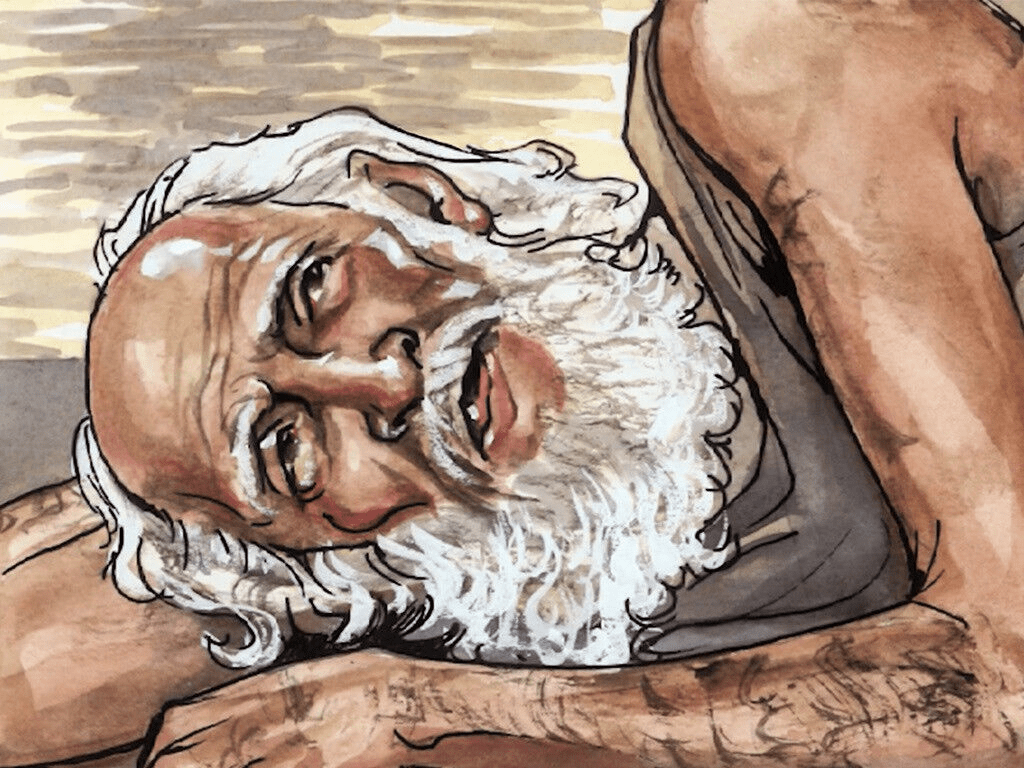
    Horatius Bonar

Meet the Man at the Pool

John 5:1-9

1-6 Soon another Feast came around and Jesus was back in Jerusalem. Near the Sheep Gate in Jerusalem there was a pool, in Hebrew called Bethesda, with five alcoves. Hundreds of sick people—blind, crippled, paralyzed—were in these alcoves. One man had been an invalid there for thirty-eight years. When Jesus saw him stretched out by the pool and knew how long he had been there, he said, “Do you want to get well?”

The sick man said, “Sir, when the water is stirred, I don’t have anybody to put me in the pool. By the time I get there, somebody else is already in.”

8-9 Jesus said, “Get up, take your bedroll, start walking.” The man was healed on the spot. He picked up his bedroll and walked off.

9-10 That day happened to be the Sabbath. The Jews stopped the healed man and said, “It’s the Sabbath. You can’t carry your bedroll around. It’s against the rules.”

There were hundreds of us, surviving in our own personal man-made hell. We were the blind and the lame; simply dropped off by our families here to exist, to somehow make it on our own. We were a desperate lot, but there was a strange camaraderie, we all understood that our condition was hopeless. We were just marking time–and my 38 years was a lifetime for some. It’s a very long time to be sick.

None of us were whole, not by a long shot, otherwise, why were we sitting here waiting to die?

It’s said by some that an angel would venture down from heaven, and stir the pool–and the first to get in the water would be healed. It was one of those strange things that kept us from going crazy–a mental mechanism that bruised hearts often carry deep inside. It was a necessary way to keep from being lost.

I lived with my friends on these hard stone steps all these years, I’ve seen some live, and many more die. Banding together we became a community of survivors. We understood each other, and we knew everyone’s story–what else was there to do but talk?

It’s funny how some ideas get started–a silly dream, or a fairy tale of leaving this pool and becoming normal again. We developed the knack of a gallows kind of humor, a bond that condemned men shared with each other. We bantered these in order to cope with this slow-motion death. These were inside jokes, mixed with hefty dollops of half-believed hope and odd humor that only dying men learn to appeciate.

But maybe it kept us alive for just one more day. Perhaps it helped us to survive this hell.

That day started like 13,879 days before, and there was nothing unusual about it. There was nothing but the growing heat, the flies, and the sour smell of unwashed bodies. But in an instant, my life was going to be decisively interrupted. And at the time I never saw it coming.

Jesus threaded His way through the sitting bodies to find me.

When our eyes met he stopped. All He did was to ask me simply— “Do you want to be made well?” That question cut through the many years of accrued pain. I mumbled something about the angel, and the pool, and not having anyone to help me into the water. His question pretty much unraveled me. It seemed like it was just Him and me, staring at each other.

He told me to stand, to pick up my mat, and walk.

All of those half-baked days of a wasted life crashed in on me then. I saw all the emptiness and sadness of 38 long years. But in an instant, He healed me. I stood and picked up my mat, I shook my head and cried. Through my tears, I saw my friends looking at me in shocked and total amazement.

I simply walked out of there, carrying the only thing I owned.

“Then the lame will leap like a deer,
and the tongue of the mute will sing for joy,
for water will gush in the wilderness,
and streams in the desert.”

Isaiah 35:6, CSB

Art: Free Bible Images, text used is from The Message, a translation by Eugene Peterson

Meet Jesus’ Family

John 7:1-5

After this, Jesus traveled around Galilee. He wanted to stay out of Judea, where the Jewish leaders were plotting his death. But soon it was time for the Jewish Festival of Shelters, and Jesus’ brothers said to him, “Leave here and go to Judea, where your followers can see your miracles! You can’t become famous if you hide like this! If you can do such wonderful things, show yourself to the world!” For even his brothers didn’t believe in him.

To be honest, I didn’t believe He was the Messiah. I simply couldn’t accept that he was the Chosen one, predicted in the Scriptures. Really now, Jesus? Our older brother? Was he the one we were all looking for? Was he the one who would save Israel? He was family, and we saw Him eat, drink, sleep. I for one didn’t believe it.

We played with him in the streets.

We ran, played ball, and raced donkeys. We sat with him around the fire when the storytellers came. We had fun dancing–(with our sisters of course). When we weren’t working in the shop, carrying water, and helping out, we found lots of things to do, and Jesus as the oldest was the one who came up with many of our adventures.

But to say that he was the one who was prophesied about in the book of Isaiah seems ludicrous. To be very honest, our father was just a poor carpenter–we lived hand-to-mouth, much like any other family in Judea. We wore Jesus’ hand-me-downs, and when he outgrew his sandals, guess what?

Looking back at it all, the whole business of him being the Messiah seemed like a sad and silly joke.

Our father and mother seemed privy to some sort of secret, but we kids never could get the whole story from them or others. Our cousins knew something, but no one was talking, and I suppose we never really pursued it. Maybe it would’ve helped, and again maybe it wouldn’t.

Our lives rotated around the Temple and the synagogue. A Sabbath day was part of our religious upbringing, and we listened to the rabbis and Pharisees as they taught. Jesus had a tremendous knack at grasping these things, and yes, he did know the Scriptures and the various interpretations that the leaders gave.

Each of us boys had the mitzvot ceremony at the age of 13.

We were told that we were now responsible before God for our own lives after this ceremony took place. This was normal for each of us. And apparently, even for Jesus, there was nothing special about it–no lightning, no doves coming down. Like I said before, it all was very normal. We were normal people trying to survive in normal Judea.

Now, this is where it gets interesting.

When Jesus was around 30 we heard that he had been baptized by our cousin John. We later heard that he started to teach and preach to any who would listen. He gathered disciples who followed him from town to town, sleeping and eating in the countryside, or wherever things opened up. I was told by many that his teaching was brilliant and authoritative.

When we started to hear of his miracles, it didn’t make any sense.

Honestly, it seemed something happened directly after his baptism–something that was hardly normal. As his brothers and sisters, we tried to process it with each other. At that time we finally came to the conclusion that Jesus was losing it. Maybe he was or at least very close to it. I remember at least twice we came to take custody of him. That was hard.

Was Jesus orthodox, did he have the Pharisee’s ‘stamp of approval?’ After so many reports of healings and exorcisms, we thought that having that could help. I remembered then that we wanted him to reveal his ministry through the proper religious channels. For ourselves, we didn’t believe he was who he claimed to be, but we desperately wanted him to be safe.

When they arrested him and gave him a trial it was a shock to us all.

And when they ordered his death by crucifixion we were deeply troubled and ashamed. Only criminals died that way. Did Jesus deserve to die like this?

But then something quite startling was said to have happened–we were told that he rose from the dead! I remember the shock; maybe these resurrection reports were being made up by those with deluded hopes. We really didn’t know, but we did wonder.

Who was he really? Who was our older brother exactly?

He replied to the one who was speaking to him, “Who is my mother and who are my brothers?” Stretching out his hand toward his disciples, he said, “Here are my mother and my brothers!

Matthew 12:48-49

[Two of Jesus’ brothers that we know of became believers, they went on to write the book of James and Jude.]

Meet the Pharisee. Meet the Tax Collector

Luke 18:10-14

 “Two men went to the Temple to pray. One was a proud, self-righteous Pharisee, and the other a cheating tax collector. 11 The proud Pharisee ‘prayed’ this prayer: ‘Thank God, I am not a sinner like everyone else, especially like that tax collector over there! For I never cheat, I don’t commit adultery, 12 I go without food twice a week, and I give to God a tenth of everything I earn.’

13 “But the corrupt tax collector stood at a distance and dared not even lift his eyes to heaven as he prayed, but beat upon his chest in sorrow, exclaiming, ‘God, be merciful to me, a sinner.’ 14 I tell you, this sinner, not the Pharisee, returned home forgiven! For the proud shall be humbled, but the humble shall be honored.”

The Pharisee:

I had it all together. I had shaped myself to be the ultimate Pharisee–the Pharisees of the Pharisees. I understood the Law; I could quote whole books, forward and backward. I fasted twice a week, tithed everything, right down to my herbs and spices. I had it all together.

I made sure everyone saw my commitment.

I strenuously kept God’s Law. I was consumed by understanding it, I tried to grasp all its nuances and complexity. The 10 commandments were emblazoned on all that I did. I wanted everyone to know that I was one of “the pure ones,” for that was the meaning behind the word Pharisee. I knew that I was pure.

I went to the Temple every day to pray, I stood holy and set apart, standing before a real and holy God. I was always the truest example to the people of Israel. I always stood when I prayed, for I was completely committed to doing all that the Law demanded of me.

One day I saw a wicked man in God’s holy temple. I had to thank God that we were total opposites. He was a tax collector and an evil person. I really was nothing like him. I rejoiced that I had become a true example of a righteous man.

I knew I was righteous, and certainly not at all like that sinful tax collector.

———————-

The Tax Collector:

I didn’t have it all together. I understood this and was horrified that I had become so evil. I came to the Temple, driven by my guilt and shame–no one had to tell me this, for I knew my sin and I was deeply ashamed.

Why I came, I don’t know. I honestly didn’t belong here, and I kept a distance from the front. I guess that’s where I belonged. On the fringes before the Holy One. It seemed now that I was drawn to this place, and I’m still not sure why I came that day.

I knew that I breathed evil and had become evil.

I fell to my knees, and I begged God to forgive me. I saw the Pharisee standing in the presence of God, but I knew I wasn’t at all like him. He was righteous and I knew I was not. Oh, how I wanted God to forgive me for all the sins I had committed.

I must tell you that my spirit was in agony.

“Humble men are very fortunate!” he told them, “for the Kingdom of Heaven is given to them. Those who mourn are fortunate! for they shall be comforted. The meek and lowly are fortunate! for the whole wide world belongs to them.

Matthew 5:3-5, LB

Jesus clearly told us who was truly forgiven that day. When we think we have it all together, we’re deceiving ourselves.

Let’s not pretend otherwise, okay.

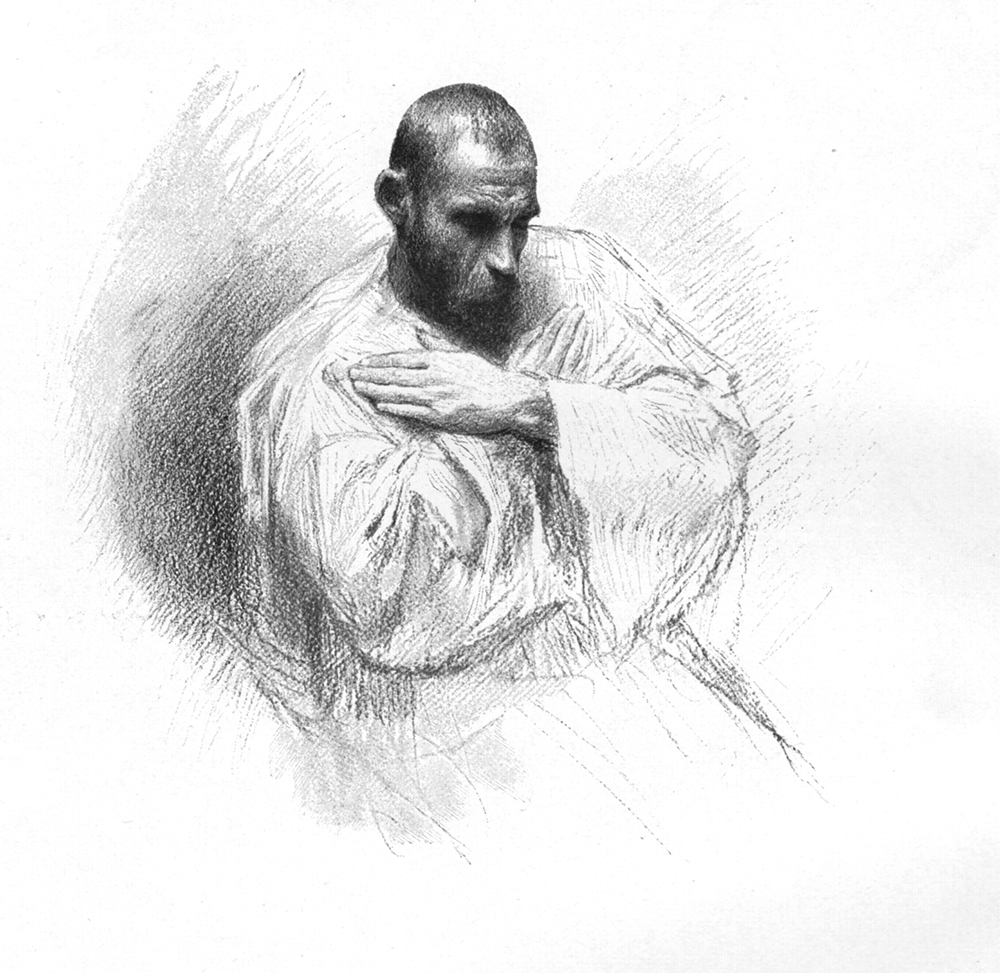
Art: Eugene Burnand, 1850-1924, litho; Scripture used here is from the Living Bible.

Meet the Crippled Woman, Healed on the Sabbath

Luke 13:10-13

“He was teaching in one of the meeting places on the Sabbath. There was a woman present, so twisted and bent over with arthritis that she couldn’t even lookup. She had been afflicted with this for eighteen years. When Jesus saw her, he called her over. “Woman, you’re free!” He laid hands on her and suddenly she was standing straight and tall, giving glory to God.”

———————-

(vv. 15-16, Upon criticism by the Pharisees)

(But Jesus shot back, “You frauds! Each Sabbath every one of you regularly unties your cow or donkey from its stall, leads it out for water, and thinks nothing of it. So why isn’t it all right for me to untie this daughter of Abraham and lead her from the stall where Satan has had her tied these eighteen years?”

17 When he put it that way, his critics were left looking quite silly and red-faced. The congregation was delighted and cheered him on.)

I was used to looking at the ground when I walked. My disease had gotten so bad that I had to use crutches to keep my balance. It seemed I sort of adjusted to seeing others out of the corner of my eyes, what can I say, you learn to adapt. You deal with the pain, and I know that many have it much worse.

I’ve endured this for 18 very long years, and at times it was easy to bear, and other times it’s very bitter and hard. God knows my heart, and I’ll take whatever He brings me.

At least I could still attend the weekly service at the synagogue. I made it there faithfully as it was my custom. The people knew me there, and they were quite kind and they accommodated my disability–I had a lot of friends there. I even had my own special spot.

But then Jesus came and taught.

On that Sabbath evening, my miracle came. The service was electric, the teacher that some were calling the Messiah began to speak. His words were coated (that’s all I can say,) with incredible authority. We had never ever heard from anyone like him. The hairs on my head began to tingle.

When he spoke we listened!

Jesus looked and He saw me. I wasn’t doing anything out of the ordinary, and I wasn’t expecting anything really. But He asked me to come forward, and again I really didn’t know why. I hobbled to Him with my crutches.

It was then He stated that I was free!

He reached out and touched me. And in an instant I stood up straight as an arrow. The pain was gone, and I was now completely whole. Now I can’t exactly say what happened. All I know was one minute I was twisted and bent over, and the next second I was standing upright!

The Pharisees went bonkers. I suppose my healing didn’t exactly fit in with their theology. I don’t really know about that. They accused Jesus of breaking the Sabbath. They became cruel and nasty. Jesus was angry at their foolishness. All I know is that I was full of joy.

I was now whole!

Jesus made an incredible observation. If a donkey could be untied and led out of a stall on the Sabbath, why couldn’t a real healing happen on God’s special day. This observation blew the Pharisees out-of-the-water. They couldn’t answer his heavenly logic. They were embarrassed. I suppose they now looked like fools to the congregation.

He gave me a new name, “a daughter of Abraham.”

This was a treasure, and I’ve contemplated that new name over the years. What do I now think of Jesus? I truly believe He is the Messiah–the Son of God!

Art: I honestly don’t know, I think it’s public domain. The verses come from the Message, Eugene Peterson’s translation.

Meet Matthew, (also known as Levi)

Mark 2:13-14

“Then Jesus went out to the seashore again and preached to the crowds that gathered around him. 14 As he was walking up the beach he saw Levi, the son of Alphaeus, sitting at his tax collection booth. “Come with me,” Jesus told him. “Come be my disciple.”

“And Levi jumped to his feet and went along.”

My name is Levi, and I once collected taxes for Rome. It was a good living–it’s funny, but my parents chose my name– “Gift of God.” They were pious Jews who dreamed I would be more than I was. I sometimes wonder. Did they understand what Jesus was calling me to become?

As a tax collector, I was considered unclean. A small step above a leper I guess. The Temple was off-limits for me; I never had any sacrifice for my many sins. I carried my guilt like a heavy jacket on a hot day–some would say that God turned his back on me. I was seen as a collaborator, a betrayer of my people.

Do you know what it’s like to be damned?

My friends were sinners like me. In some dark way, we understood each other, we were all outcasts. Some of us were drunkards and whores, others were thieves and scoundrels, all of us were undesirable. They say that misery loves company–and we all were very much lost.

My tax booth was situated at a crossroads, it was ideal for collecting taxes. No one carrying goods could come by without paying me. Over time I became wealthy, and that was very good, for me anyway. But, I must admit at times that it was very hard. I wondered if that was all my life was good for, collecting coins for Rome.

Jesus was teaching near my booth, I listened to Him, and that was a good thing. But when He passed by me my mind and heart finally came together. I both felt and knew that there had never ever been someone like Him. I prided myself as a good judge of character–my business taught me that. But I realized exactly who He was.

He stopped right in front of my booth.

Jesus looked hard at me. I felt His eyes searching and I realized that He seemed to look right through me. I guess He knew exactly who and what I was all about, and it unnerved me, but in a good way. I wasn’t seeing Him, rather it was He that saw me.

Jesus’ words were a lightning bolt. “Come, follow me.” And suddenly all I attained in my business was a pile of nothingness. I can never get over the shock of those words– Jesus, the Messiah wanted me. What those words meant was non-negotiable. He had put His call on me, someone who was very much lost.

What could I say–what could I do?

To follow was not optional. I saw the silver and gold and realized they meant nothing. I left the coins on the table and I started to live a life that really mattered. I have never doubted or questioned that moment. What could I do, but follow Him?

We had a going-away party that night and I invited all my “disreputable” friends. Jesus shared many wonderful things with us. We had never had anyone who really cared for us like Him. We had never experienced this before.

The Pharisees were incensed. They began to rebuke Jesus for setting down to eat and fellowship with us. In their minds my home was unclean–we were all unclean. But that was not the way of Jesus. He loved us when nobody else would.

“When Jesus heard what they were saying, he told them, “Sick people need the doctor, not healthy ones! I haven’t come to tell good people to repent, but the bad ones.”

Mark 2:17

Art: Wautier, Carel; The Calling of Saint Matthew,” c. 1650

Meet the Woman Caught in Adultery

John 8:3-11

Then the scribes and the Pharisees brought a woman caught in adultery, making her stand in the center. “Teacher,” they said to him, “this woman was caught in the act of committing adultery. In the law Moses commanded us to stone such women. So what do you say?” They asked this to trap him, in order that they might have evidence to accuse him.

Jesus stooped down and started writing on the ground with his finger. When they persisted in questioning him, he stood up and said to them, “The one without sin among you should be the first to throw a stone at her.” Then he stooped down again and continued writing on the ground. When they heard this, they left one by one, starting with the older men. Only he was left, with the woman in the center. 10 When Jesus stood up, he said to her, “Woman, where are they? Has no one condemned you?”

11 “No one, Lord,” she answered.

I remember how Jesus defended me from the religious men. I had been publically led through the crowds. The temple was filled with people who were there for the festival. It was a time of joy and feasting, but not for me. Definitely not for me.

The religious police escorted me to Jesus. I was now the focus of everyone’s attention. I felt dirty and ashamed. Standing there I could feel the leering looks from the Pharisees; but there was something else as well, a look from Jesus that I had never seen before. There was compassion there, something quite extraordinary.

I’m ashamed, but I committed adultery, sleeping with another man who wasn’t my husband.

I was to be stoned, to know hard rocks thrown by “holy” men. The Law had pronounced my guilt, and I knew exactly how I was to be punished. And I deserved it. Yet the man who I slept with was never charged, he escaped and it was I that would be put to death. I didn’t blame him.

My shame was now public knowledge–everyone knew, the Pharisees made sure of that. Jesus had been accepted by some to be the Messiah and by others not so much. I wasn’t sure one way or another. I was in a daze, not able to even try to defend myself.

They only put me front and center to test Him. These men who brought me had ulterior motives, they desperately hoped Jesus would stumble. I think they wanted to prove once and all to the crowds that were watching that Jesus really wasn’t the Messiah. They wanted to trap him.

Jesus realized the implications of this satanic effort.

Only Rome had the power of execution, and the Mosaic Law declared that I was to die. I stood waiting, expecting the worst. What else could I do?

It’s funny, but Jesus understood all of this. He seemed to look right through this theological trick, and He responded in a way that really shocked everyone. He never spoke, but bowed low and began to write in the dirt with his finger. Amidst their vicious accusations, they pressed their case.

Jesus bent down again, and he wrote some more.

I never knew what he wrote–but I had to believe it must have been something that revealed the sin in the hearts of the men who were accusing me. In that moment, they quickly dropped the case against me. They all filed out, one by one, in dramatic fashion. I now stood alone with Jesus.

Jesus looked directly at me. I was still afraid, but it was strange, I felt a wave of peace as well. I quietly waited, not knowing what He was going to say to me. I half expected the worst.

Yes, he did confront me. He wanted me to acknowledge that those accusing men had left. I saw it and understood. Jesus was asking me to believe that I was now really free. But then he wanted me to understand something that seemed quite crucial.

“Neither do I condemn you,” said Jesus. “Go, and from now on do not sin anymore.”

That dear one was a powerful moment. He set me free with the understanding that He did not condemn me. My new freedom came with a catch–sort of. I knew then that my sin must be renounced. My freedom came with a price. But knowing I was completely released, meant I was now a free woman.

At that moment I understood completely.