Meet Jesus, Who Calmed a Storm

Mark 4:35-41

On that day, when evening had come, he told them, “Let’s cross over to the other side of the sea.” 36 So they left the crowd and took him along since he was in the boat. And other boats were with him. 37 A great windstorm arose, and the waves were breaking over the boat, so that the boat was already being swamped. 38 He was in the stern, sleeping on the cushion. So they woke him up and said to him, “Teacher! Don’t you care that we’re going to die?”

39 He got up, rebuked the wind, and said to the sea, “Silence! Be still!” The wind ceased, and there was a great calm. 40 Then he said to them, “Why are you afraid? Do you still have no faith?”

41 And they were terrified and asked one another, “Who then is this? Even the wind and the sea obey him!”

It was Jesus’ idea to cross the lake. It seemed He had a reason why, and as we read this we understand His motives. It’s obvious that Jesus understood that there was “people to see, and places to go,” (Mark 5:1-19). There were crowds of others who “tailed” Him, wanting to see what would happen next. Jesus was a magnet it seemed.

It seems that the boat belonged to Peter, and the journey across the water would take some time, it was 5–6 miles at this crossing point. It’s important to know that many of Jesus’ disciples were seasoned fisherman and I imagine that the trip would be fairly routine to them. But what’s going to happen next isn’t anything but.

The storm picked up quickly as they often do.

For these experienced sailors this wasn’t a big issue. Storms were manageable, however the text tells us that there came a point when the winds and waves began to fill the boat. They couldn’t bail it out fast enough. The storm seemed to ‘explode’ and it seems that they weren’t prepared to deal with this. It wasn’t in their plans.

That’s often the way things happen isn’t it? Following Jesus isn’t always smooth sailing in calm waters.

Things got so bad so quick that they turned to Jesus. Apparently He was catching 40 winks on a cushion in the back of the boat. (Why He was sleeping I have no idea; He must’ve been worn out by a full day of ministry.) When everything is spinning out-of–control it’s at the point they finally call on Him.

They woke Jesus up. (I guess if you’re about to drown it’s probably a good thing to be aware of it anyway.)

The disciples knew they had lost the battle. The storm was about to send them to the bottom of the Sea of Gaililee. In just a few moments they all were going to drown. Imminent death is a great time to call out to Him.

It was at this point that the disciples turned to Jesus. Why the delay? It doesn’t make sense, but knowing myself I only seem to call on Him when things get out-of-hand. My first response is trimming the sails and to start bailing. I don’t think about calling on Jesus until I realize that I’m not really in control.

In tradition it was God who was able to control storms, (see Psalm 107:29 and Jonah 1:4). When Jesus stood up and took on that authority over the wind and waves He was acting as the Messiah. But more than that, He was behaving as God.

Jesus’ question to them drills right to the heart of things in verse 40.

This is what triggered the response of the disciples in verse 41. Perhaps they were more scared of Jesus than the storm?

Incidently, the words Jesus used as He spoke to the storm means “be muzzled.” He uses the exact same words as He casts out the demons of the man in the very next event (Mark 5:7-9). I wonder. Could it be that the storm was a satanic/demonic attack? Maybe?

“O LORD God of hosts, who is mighty like You, O LORD? Your faithfulness surrounds You. You rule the raging of the sea; when waves rise, You still them.” 

Psalm 89:8-9

Meet the Deaf and Mute Man

“Some people brought a man who could neither hear nor speak and asked Jesus to lay a healing hand on him. He took the man off by himself, put his fingers in the man’s ears and some spit on the man’s tongue. Then Jesus looked up in prayer, groaned mightily, and commanded, “Ephphatha!—Open up!” And it happened. The man’s hearing was clear and his speech plain—just like that.”

36-37 “Jesus urged them to keep it quiet, but they talked it up all the more, beside themselves with excitement. “He’s done it all and done it well. He gives hearing to the deaf, speech to the speechless.”

Mark 7:34-37, The Message

Jesus enjoyed carrying the good news to distant places. His ministry wasn’t confined. He went to places that orthodox people avoided. Jesus penetrated these places and found a rich mission field. (This should speak volumes to us.)

It was in Decapolis that He met this man. He was deaf and mute, and it seems no doctor could help him. Close friends brought this man to Jesus. They begged Jesus to heal him–perhaps this shows their faith and love. (Again this should speak to us. Do we care for others–or not?)

The Lord led this man away from the crowd (interesting.) It seems Jesus wanted privacy. I think that He wanted to avoid the “carnival” atmosphere that healing would cause. Jesus was God–not a showman. (This dear one should clarify things for us.)

It interests me the approach He took. Jesus’ fingers went into the man’s ears. He spits (!) and touched the man’s tongue with His saliva. (Oh if He could do this to us!) Jesus looked up to heaven and said one word, “Ephphatha!” Which in English means “be opened.”

The man suddenly began to speak!

Everyone who witnessed was amazed. Jesus looked at those and told them not to say a thing about what just happened. (Is this humility or what?) Of course, it interests me that the crowd ignored His command; they couldn’t help but spread the news. They must have figured that Jesus was the Messiah, and this miracle proved it.

But the way He went about this amazes me–why the fingers and obviously why the spit? Perhaps this man, (and his friends) needed to see something more “physical.” Maybe? Could it have communicated something to Jesus’ disciples who were watching? Could it be that this can guide us as we now carry Jesus’ power?

I’m thinking through these things.

One: Jesus does impossible things He extends Himself to the “unorthodox”

Two: He seems to heal in ways we really don’t quite understand.

Three: What Jesus does is not about “showmanship,” He avoids publicity and self-promotion.

And there must be other points. It’s good I think, to roll these thoughts around.

Meet Peter and the Fishes Mouth

When they came to Capernaum, those who collected the temple tax approached Peter and said, “Doesn’t your teacher pay the temple tax?”

25 “Yes,” he said.

When he went into the house, Jesus spoke to him first, “What do you think, Simon? From whom do earthly kings collect tariffs or taxes? From their sons or from strangers?”

26 “From strangers,” he said.

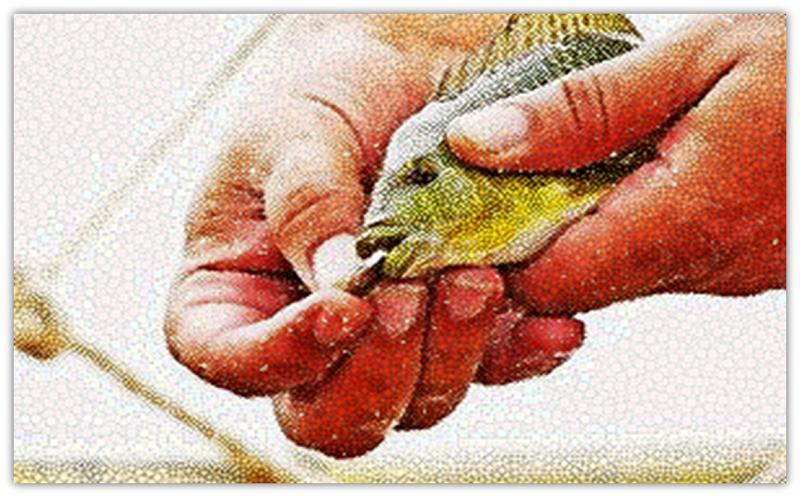
“Then the sons are free,” Jesus told him. 27 “But, so we won’t offend them, go to the sea, cast in a fishhook, and take the first fish that you catch. When you open its mouth you’ll find a coin. Take it and give it to them for me and you.”

Matthew 17:24-27, CSB

Taxes! We had just arrived home in Capernaum when the tax collectors showed up. How they knew we were back in town I have no idea. But they did. I guess it shouldn’t surprise me. These guys have a tendency to show up when you’re broke.

Taxes. They knew that Jesus was a teacher, a rabbi, and they had the audacity to ask if he was somehow exempt from paying to support the Temple. I had to tell them that He to had to pay, but honestly, I wasn’t sure.

I went back into the house and Jesus was waiting to quiz me.

He surprised me by knowing what had just occurred with my encounter with these tax guys. He knew. He asked me what I thought–(Jesus always seemed to ask me questions like that. I hated being put on the spot.)

“From strangers” seemed to be the simple and logical answer. Jesus explained that He’s not liable to pay this tax, because the Father certainly doesn’t require it of His own Son. I realized then that was the real lesson that He wanted me to understand.

But rather than insist on His “sonship,” Jesus didn’t want to create an issue with anyone. He asked me (the commercial fisherman), to throw out a line and a hook–He told me that the first fish that I caught would have a coin in its mouth!

I must tell you that it happened exactly like He said it would.

The fish I caught had a drachma in its mouth. What can I say? It was there and it undid me. It happened and I understood again that He really did have power.

Jesus told me to pay the tax–His and mine. He knew He didn’t need to pay. Rabbis were exempt from this, and yet Jesus didn’t want to offend anyone, He paid the tax to avoid any objection.

_______________________

Bryan’s note: I’ve pondered this miracle of Jesus, and it astounds me. A fish with a coin in its mouth! But in this, He shows His power. Consider for a moment the story of Jonah where a big fish was specially created to be the vehicle for a disobedient prophet. Jesus reveals His omnipotence over all things.

Jesus is the Creator and He does this without any problem at all. He simply does it. He is God after all.

“All things were created through him, and apart from him not one thing was created that has been created.”

John 1:3, CSB

Meet Lazarus

John 11:25, 26; vv. 33-44

 25 Jesus said to her, “I am the resurrection and the life.[a] Whoever believes in me, though he die, yet shall he live, 26 and everyone who lives and believes in me shall never die. Do you believe this?” 27 She said to him, “Yes, Lord; I believe that you are the Christ, the Son of God, who is coming into the world.”

Jesus Weeps

When Jesus saw her weeping, and the Jews who had come with her also weeping, he was deeply moved[b] in his spirit and greatly troubled. 34 And he said, “Where have you laid him?” They said to him, “Lord, come and see.” 35 Jesus wept. 36 So the Jews said, “See how he loved him!” 37 

Jesus Raises Lazarus

38 Then Jesus, deeply moved again, came to the tomb. It was a cave, and a stone lay against it. 39 Jesus said, “Take away the stone.” Martha, the sister of the dead man, said to him, “Lord, by this time there will be an odor, for he has been dead four days.” 40 Jesus said to her, “Did I not tell you that if you believed you would see the glory of God?” 

 So they took away the stone. And Jesus lifted up his eyes and said, “Father, I thank you that you have heard me. 42 I knew that you always hear me, but I said this on account of the people standing around, that they may believe that you sent me.” 43 When he had said these things, he cried out with a loud voice, “Lazarus, come out.” 44 The man who had died came out, his hands and feet bound with linen strips, and his face wrapped with a cloth.

Jesus said to them, “Unbind him, and let him go.”

My name is Lazarus and I was a special “friend” of Jesus. We liked being with each other, and my sisters Mary and Martha also enjoyed fellowshipping with Him. Whenever He passed through Bethany, Jesus always had an open invitation to visit.

What’s it like to be dead? Many ask me this, and I suppose they want to understand, and I don’t blame them. To me, it seemed like a very deep sleep–but I didn’t dream. Those who look for any special insight, will not find it from me. And yet, I am His witness. He has incredible power over death.

I heard Him call my name.

It pierced through everything with an authority I’d never heard before. I had been laid in my tomb for 4 days and my physical body had begun to putrify. When they rolled the stone away the terrible smell of death lay heavy in the air.

I was tightly bound in cotton wraps and sticky spices had been applied to my body. Mary and Martha had objected to Jesus’ attempt. As I looked back I realize that their actions were justified. After all, who can give life when one is very much dead. And not only dead but well on the way on to decay. The smell wafted from my tomb.

I had heard His shout, and it was then death was reversed.

My heart and brain began to work again. When I came to I found that I was lying on a stone table and tightly wrapped in the clothes of the dead. I managed to sit up, and I shuffled toward the light that had entered the tomb by the stone that covered the door.

When Jesus saw me I believe that He was laughing. He gave the command to the shocked bystanders, He commanded them to unwrap me. I suppose that then I realized I was now in the land of the living. I can’t explain what had happened, But my grave clothes were unwrapped.

There were many that day that became believers.

Many had attested that I was most certainly dead, after all, they had attended my funeral. Some had observed that I had been slathered in the sticky ointment–fragrant spices. And a few were witnesses to see the stone rolled in place.

So many believed in Jesus’ power of resurrection that day–they were completely amazed and simply reacted to what Jesus had just done for me.

There were some who simply didn’t (or wouldn’t) believe.

There were the Pharisees and the Sadducees who wanted me dead hoping to nullify my witness and my resurrection from the dead.

Their hatred of Jesus’ ministry was only strengthened. My own resurrection proved His authority and power over even death. I was a walking and breathing miracle that they refused to accept. It got so bad that the religious leaders wanted to kill me because so many believed in my resurrection. I was a living witness to many.

Yes, I know that I’ll die again. But even now, in my second death, I’m not afraid anymore.

I had become an embarrassment to them, a constant reminder that Jesus had defeated death.

He alone can believe in immortality who feels the resurrection in him already.

Frederick W. Robertson

But some of them went away to the Pharisees and told them the things Jesus did. Then the chief priests and the Pharisees gathered a council and said, “What shall we do? For this Man works many signs. If we let Him alone like this, everyone will believe in Him, and the Romans will come and take away both our place and nation.”

John 11:53-54

Art: blogspot.com. Scripture: Christian Standard Bible, Holman Publishers; The Message, Eugene Peterson

Meet the Widow, at the Funeral of Her Son

Luke 7:11-17

Not long afterwards Jesus went with his disciples to the village of Nain, with the usual great crowd at his heels. 12 A funeral procession was coming out as he approached the village gate. The boy who had died was the only son of his widowed mother, and many mourners from the village were with her.

13 When the Lord saw her, his heart overflowed with sympathy. “Don’t cry!” he said. 14 Then he walked over to the coffin and touched it, and the bearers stopped. “Laddie,” he said, “come back to life again.”

15 Then the boy sat up and began to talk to those around him! And Jesus gave him back to his mother.

16 A great fear swept the crowd, and they exclaimed with praises to God, “A mighty prophet has risen among us,” and, “We have seen the hand of God at work today.”

17 The report of what he did that day raced from end to end of Judea and even out across the borders.

My world crashed down around me. First, my husband, and then my only son are dead. I’m left absolutely alone, I have lost everything that really matters. I am penniless, without hope. Why has God treated me this way?

Am I being judged for my sins? Only God knows.

I live in Nain, which is a few miles south of Nazareth. It’s a village where everyone knows each other and it’s hard to be private. Everyone knew my situation. But that doesn’t make it any easier. Grief had become my constant companion, I knew it well. Psalm 88:18 became my deepest cry, I finally understood it.

The funeral procession began at my house and led to the cemetery. It was the same route we walked with my husband, and now today with the body of my only son. A large crowd escorted the coffin, but that brought me nothing but more pain.

They were a small comfort, but they changed nothing.

We arrived at the village gate at the same time as Jesus of Nazareth. He was accompanied by a large boisterous crown. There were suddenly hundreds of people converging at one spot. The crowds mixed with the mourners like two ocean currents that come together, hot and cold.

Jesus approached me.

He was deeply moved and there was incredible compassion on His face. “Please don’t cry,” He told me. Then he walked over to the coffin and the bearers stopped. Everyone in the crowd stopped and riveted their gaze on Jesus.

Jesus reached out and touched my son’s coffin.

“Boy, I tell you to wake up!” Suddenly, my son sat up and began to speak. My heart jumped in my throat as the bearers lowered the bier. “My son is alive!” I screamed, “Alive!”

Jesus led my son to me. I held him close and stroked his hair I couldn’t let him go. Suddenly everything changed. I knew God saw me and loved me. I have never been happier. I could never have dreamed something like this could happen to someone like me.

The crowd stood dumbstruck in the presence of Jesus. After a minute they began to murmur, “He is a prophet!” Others said, “God has visited His people.” People were hugging each other with complete abandon. All I could do is hold my precious son.

Tears, tears of joy rolled down my cheeks.

The news of my son’s resurrection spread throughout the entire region, and the popularity of Jesus skyrocketed. God was making Himself known through Jesus Christ; but more importantly, we knew He loved us The peace and hope were like medicine to a beaten-down people.

Lord of mercy, raise up all that is fallen inside of me. I can be so dead sometimes and your presence is what I need. Impart newness of life to my heart. Come and be with me. Amen.

Art by Pam Lucey. Scripture from the Living Bible, Tyndale House

Meet the Samaritan Leper

Luke 17:11-19

11-13 It happened that as he made his way toward Jerusalem, he crossed over the border between Samaria and Galilee. As he entered a village, ten men, all lepers, met him. They kept their distance but raised their voices, calling out, “Jesus, Master, have mercy on us!”

14-16 Taking a good look at them, he said, “Go, show yourselves to the priests.”

They went, and while still on their way, became clean. One of them, when he realized that he was healed, turned around and came back, shouting his gratitude, glorifying God. He kneeled at Jesus’ feet, so grateful. He couldn’t thank him enough—and he was a Samaritan.

17-19 Jesus said, “Were not ten healed? Where are the nine? Can none be found to come back and give glory to God except this outsider?” Then he said to him, “Get up. On your way. Your faith has healed and saved you.”

It’s said by many that “misery loves company.” So here we were, ten men banded together, each as lost and far gone as the other. Once our lives were whole and normal–wives and children, homes and jobs, but those wonderful things had been ripped away when we were told we had leprosy.

And basically, I was an outcast among outcasts. I was the sole Samaritan among Jews; not that it mattered anymore–those kinds of distinctions were no longer an issue between us. What we all were facing was a “slow-motion” death. There was absolutely nothing anyone could do, being a leper meant we were beyond any hope.

Do you have any idea what leprosy is?

It was the ultimate impurity–we were the bottom part of the “bottom of the barrel.” Every morning we sat down and unrolled our dirty bandages. We counted fingers and toes–and we examined each other’s faces noses, and ears. Leprosy numbs, the nerves become insensitive. Essentially we were rotting away before each other’s eyes.

We scavenged for food mostly, sometimes our families would set out baskets of bread and fish, maybe some wine we hoped. And sometimes they wrote us notes which could be both good and bad–they just reminded us that all we knew was gone. We would share these with each other, somehow we wanted and needed that bittersweet solace.

I believed that God, in His infinite wisdom, had cursed me.

We were the damned. Walking and talking zombies who were just waiting to die.

We talked among ourselves–the healings that Jesus was doing were fascinating to us. The blind received sight, demons were evicted, the crippled and lame now walked tall and whole. We joked about our little group meeting Jesus for ourselves, but we were imagining the impossible. When you’ve lost enough hope, black humor settles in to stay.

We somehow heard that Jesus was going to travel near us, so we walked to a hill by the road where we might see him come by. It seemed foolish, but it was better than just sitting. It would be good to see what the fuss was all about. We saw a group that was coming down the road–it was Jesus and his followers, so we waited.

“Jesus, Master, have mercy on us!”

Suddenly that became our desperate cry. Each of us stood and screamed out to Him in our lostness–that got His attention. He turned to look at us, and then declared these powerfully gentle and healing words, ““Go, show yourselves to the priests.” That was it, six words, no theatrics.

But as I said before, I was a spiritual outcast, a Samaritan, and going to the priests wasn’t possible. So instead I went directly to Jesus. You should have seen me, I was kneeling and shouting praises to God! Dear one, joy was an understatement–I was astonished at new hands and toes, ears and skin. Where there was once rotten flesh there was now fresh skin–baby soft and brand new.

I was now whole!

Where the nine others went, I don’t know. All I truly knew was that my leprosy was instantly gone.

Lord Jesus, you rule over all sickness and disease. I was like this leper, I had no hope, but you found me and set me free. You forgave my sin. Thank you for finding and healing me. Help me to follow you. Amen.

Image: CNN, Scripture “The Message, by Eugene Peterson.

Meet the Master of Ceremonies in Cana

John 2:9-10

When the master of ceremonies tasted the water that was now wine, not knowing where it had come from (though, of course, the servants did), he called the bridegroom over.

10 “This is wonderful stuff!” he said. “You’re different from most. Usually, a host uses the best wine first, and afterwards, when everyone is full and doesn’t care, then he brings out the less expensive brands. But you have kept the best for the last!”

Full account: John 2:1-10

I really don’t believe in miracles. But something happened when I was overseeing a wedding in Cana that I can’t explain. I’ve thought a lot about it and as I uncovered some of the details–well, part of me believes, and part of me can’t.

My duty was to oversee the details that are part of every wedding. That includes having a sufficient source of wine for the party. If I made a mistake or miscalculated the thirst of the guests, it’s the absolute worst thing I could do. Not too much wine (as it could be expensive) or not too little either. If I blew it, it would go down as a shameful thing.

Essentially I freed up the bride and the groom so they could enjoy their day–I handled all of the logistical stuff. It was my ministry you could say, I had a knack for managing these events, it was how I made my living. (It’s all about having a good reputation, and I suppose the shekels were also a part of my thinking too.)

This particular wedding in Cana sort of got out-of-hand.

Too many guests too soon, and man were they thirsty. I brought in the wine, and it wasn’t enough–I was blowing it, and honestly, I really didn’t know how I was going to extricate myself and avoid this incredible goof. Word was spreading fast; we were running out. (People were starting to panic!)

My employees, my servants, gathered around to help me think. They basically gave me the news, and they expected me to do what was out of my power to do. I rarely had encountered a predicament like this. Poor planning on my part and now the groom would take the rap.

I was surprised when the servant came with a cup for me to sample!

Tasting that wine I realized then and there that this was not the usual plonk–as a matter of fact, it was the best that could be found (and I know all about wine, believe me). When I found the groom and told him…”Most serve the best at first, but you rascal, you saved the very best for last!”

I was dumbfounded when I investigated its source. It was water, coming from six purification jars (each one could hold up to 30 gallons). Each one was filled to the brim, and each one became excellent wine. Some have told me that Jesus didn’t add anything–but He transformed it. Now dear reader, perhaps I understood the incredible power of Jesus.

I’m not really a believer quite yet, but maybe?

I suppose that this miracle describes having a life that’s being transformed. As we grow we start to realize that He’s taking us higher up and deeper in. Look for your next step, there’s always much more in “becoming.”

And we all, who with unveiled faces contemplate the Lord’s glory, are being transformed into his image with ever-increasing glory, which comes from the Lord, who is the Spirit.

2 Corinthians 3:18, NIV

Art by Paolo Caliari, (1528-88). Scripture is from the Living Bible, by Tyndale House.