The Sword Meets the Ear of Malchus

Luke 22:49-51, CSB

“When those around Him saw what was going to happen, they asked, “Lord, should we strike with the sword?” 50 Then one of them struck the high priest’s servant and cut off his right ear.

51 But Jesus responded, “No more of this!” And touching his ear, he healed him.

How should we proceed with this? Perhaps we should start with the garden of Gethsemane. The setting explains a lot. Jesus is praying alone and He asks His Father for the strength to make it to His cross. It’s said that at that He sweated out what was like drops of blood.

The usual way of praying for a Jewish man was standing, but here we read that Jesus was on His knees. We also read that an angel showed up–it says that this angel came with strengthening power. The Greek word for “strengthen” can mean to invigorate. I believe Jesus’ prayer was answered (but not the way He wanted).

Jesus now had the strength to stand up and face the terror of the cross.

Judas led the mob that came to arrest Jesus. There was the kiss of betrayal and I suppose that the torchlight wasn’t really enough to identify Jesus outright. Judas’ kiss goes into the history books as the ultimate act of a traitor. It’s probably the most wicked kiss ever given to another.

What happens next seems to come out of an R–rated movie script. Peter takes up a sword and slashes and connects with a guy named Malchus who was the servant of the high priest. An ear is chopped off and Peter has a bloody sword, but not so fast. Jesus insisted that this is not the way of a true disciple.

Some would suggest that having good swordsmanship is a vital characteristic of a follower of Jesus.

But I don’t think so.

Jesus stops the whole scene to pick up Malchus’ ear and reattach it. Peter is definitely rebuked (notice the exclamation mark in verse 51)! Being a believer means following Jesus to the garden, and then the cross. Often we look at anything that avoids these places. When we’re truly following Him we are commanded to take up our own cross daily.

“When the Church takes sword in hand, it usually shows that it does not know how to wield it, and as often as not has struck the wrong man.”

Maclaren

Malchus plays such a minor role, and yet the ear amputation speaks volumes. We discover that the implications clarify the Lord’s desire for His followers–something that makes it clear that, “His ways are not our ways.”

Even in the garden, facing arrest and torture, Jesus is still reaching out to those around Him. Malchus is Jesus’ last ‘physical’ healing of another–He is kind and merciful, and He shows us how to love our enemies.

Today is Maundy Thursday. Tomorrow the pain of the cross. But He’s in the garden now, and recognizes exactly what is going down. “But this is your hour, and the power of darkness.”

“You have heard that it was said, ‘You shall love your neighbor and hate your enemy.’ 44 But I say to you, Love your enemies and pray for those who persecute you,”

Matthew 5:43-44

Jesus and the Cliff

Luke 4:28-30, CSB

” When they heard this, everyone in the synagogue was enraged. 29 They got up, drove him out of town, and brought him to the edge of the hill that their town was built on, intending to hurl him over the cliff. 30 But he passed right through the crowd and went on his way.”

When I pastored a church, I loved it when people told me that my sermon was the best they’ve ever heard. What a boost! But Jesus didn’t have that response when He preached at the synagogue in His hometown. The people went nuts! They weren’t happy with what Jesus had to say.

Nazareth was big enough (500 people) to have its own synagogue. This was the central place in the town. The village was also built very near to a sizable cliff. (You can see it today.)

It wasn’t a nicey-nice sermon, and it certainly didn’t comfort the congregation. They got really angry–Jesus point-blank confronted them. I suppose the Jewish leaders may have incited the crowd, which is sort of typical. If we take a quick peek at what He said perhaps we can understand their response (Luke 4:23-27).

But it’s really odd, initially, the people were responsive:

“They were all speaking well of him and were amazed by the gracious words that came from his mouth; yet they said, “Isn’t this Joseph’s son?”

(v. 22)

Two things immediately strike me, maybe they’re significant, and maybe not. One–This attempt to toss off the cliff came immediately after Jesus’ temptation. (One of Satan’s temptations was Jesus jumping off the pinnacle of the temple.) Two–this is Nazareth, the town where He grew up, and the people obviously had issues about this ‘familiarity.’

They couldn’t or wouldn’t accept Him.

What probably happened is this. After Jesus’ sermon, the people were enraged. They escorted Him, pushing and shoving to the cliff. Throwing Jesus off was just the beginning, as He landed they would have gathered rocks (as big as a person’s head) and they would’ve finished the deed by stoning Him. They would have aimed at His chest first, and then the head. Survival was unlikely.

Prophets and teachers are seldom respected by who is closest to them. (Trust me, I know all about this.) Joseph, Jesus’ step-dad (if he was alive) would’ve had a carpentry shop. And Mary would’ve shopped with the women of the village. Both would have been in the synagogue and part of the crowd.

So tell me. What lesson can we grasp from this passage?

We’re people who’ve got the ability to make choices. Stoning is frowned upon in our culture; but could it be that we respond to Jesus’ words in less extreme ways? Physically we can’t react like this. But could it be we ignore Him or are apathetic to the things He says to us? Might this be as “bad” as stoning? (Maybe I’m putting too fine a point on it?)

The Lord Jesus’s voice to us should never be trifled with.

The things He speaks are supremely authoritative–what He shows us is not a trivial thing. His words are always significant. What Jesus says to us mustn’t be ignored, no matter what they communicate.

As believers or nonbelievers, we must take into our hearts the word that He speaks. To minimize or nullify (by our apathy?) is incredibly dangerous. When we judge Him we’re actually judging ourselves, and that dear one is frightening. We make the decision to accept or reject Him. It’s that freedom of choice that can be scary.

What has Jesus spoken to you that you’re turning a blind eye to?

Is it possible He has spoken but you’re ignoring Him? I mean no harm and it’s not possible for me to know your heart. But maybe you’ve listened up to a certain point and ignored the things that don’t settle with you. Personally, when I read Jesus’ words in the Gospels I discover an awful lot that I don’t really want to hear. (He talks about humility and loving our neighbor before ourselves. Yikes!)

Please consider this honestly. It’s spiritually dangerous to be apathetic and not to pay attention to what you know to be the full Word of God.

“In all unbelief there are these two things: a good opinion of one’s self, and a bad opinion of God.”

    Horatius Bonar

Meet Jesus, Who Calmed a Storm

Mark 4:35-41

On that day, when evening had come, he told them, “Let’s cross over to the other side of the sea.” 36 So they left the crowd and took him along since he was in the boat. And other boats were with him. 37 A great windstorm arose, and the waves were breaking over the boat, so that the boat was already being swamped. 38 He was in the stern, sleeping on the cushion. So they woke him up and said to him, “Teacher! Don’t you care that we’re going to die?”

39 He got up, rebuked the wind, and said to the sea, “Silence! Be still!” The wind ceased, and there was a great calm. 40 Then he said to them, “Why are you afraid? Do you still have no faith?”

41 And they were terrified and asked one another, “Who then is this? Even the wind and the sea obey him!”

It was Jesus’ idea to cross the lake. It seemed He had a reason why, and as we read this we understand His motives. It’s obvious that Jesus understood that there was “people to see, and places to go,” (Mark 5:1-19). There were crowds of others who “tailed” Him, wanting to see what would happen next. Jesus was a magnet it seemed.

It seems that the boat belonged to Peter, and the journey across the water would take some time, it was 5–6 miles at this crossing point. It’s important to know that many of Jesus’ disciples were seasoned fisherman and I imagine that the trip would be fairly routine to them. But what’s going to happen next isn’t anything but.

The storm picked up quickly as they often do.

For these experienced sailors this wasn’t a big issue. Storms were manageable, however the text tells us that there came a point when the winds and waves began to fill the boat. They couldn’t bail it out fast enough. The storm seemed to ‘explode’ and it seems that they weren’t prepared to deal with this. It wasn’t in their plans.

That’s often the way things happen isn’t it? Following Jesus isn’t always smooth sailing in calm waters.

Things got so bad so quick that they turned to Jesus. Apparently He was catching 40 winks on a cushion in the back of the boat. (Why He was sleeping I have no idea; He must’ve been worn out by a full day of ministry.) When everything is spinning out-of–control it’s at the point they finally call on Him.

They woke Jesus up. (I guess if you’re about to drown it’s probably a good thing to be aware of it anyway.)

The disciples knew they had lost the battle. The storm was about to send them to the bottom of the Sea of Gaililee. In just a few moments they all were going to drown. Imminent death is a great time to call out to Him.

It was at this point that the disciples turned to Jesus. Why the delay? It doesn’t make sense, but knowing myself I only seem to call on Him when things get out-of-hand. My first response is trimming the sails and to start bailing. I don’t think about calling on Jesus until I realize that I’m not really in control.

In tradition it was God who was able to control storms, (see Psalm 107:29 and Jonah 1:4). When Jesus stood up and took on that authority over the wind and waves He was acting as the Messiah. But more than that, He was behaving as God.

Jesus’ question to them drills right to the heart of things in verse 40.

This is what triggered the response of the disciples in verse 41. Perhaps they were more scared of Jesus than the storm?

Incidently, the words Jesus used as He spoke to the storm means “be muzzled.” He uses the exact same words as He casts out the demons of the man in the very next event (Mark 5:7-9). I wonder. Could it be that the storm was a satanic/demonic attack? Maybe?

“O LORD God of hosts, who is mighty like You, O LORD? Your faithfulness surrounds You. You rule the raging of the sea; when waves rise, You still them.” 

Psalm 89:8-9

Meet the Deaf and Mute Man

“Some people brought a man who could neither hear nor speak and asked Jesus to lay a healing hand on him. He took the man off by himself, put his fingers in the man’s ears and some spit on the man’s tongue. Then Jesus looked up in prayer, groaned mightily, and commanded, “Ephphatha!—Open up!” And it happened. The man’s hearing was clear and his speech plain—just like that.”

36-37 “Jesus urged them to keep it quiet, but they talked it up all the more, beside themselves with excitement. “He’s done it all and done it well. He gives hearing to the deaf, speech to the speechless.”

Mark 7:34-37, The Message

Jesus enjoyed carrying the good news to distant places. His ministry wasn’t confined. He went to places that orthodox people avoided. Jesus penetrated these places and found a rich mission field. (This should speak volumes to us.)

It was in Decapolis that He met this man. He was deaf and mute, and it seems no doctor could help him. Close friends brought this man to Jesus. They begged Jesus to heal him–perhaps this shows their faith and love. (Again this should speak to us. Do we care for others–or not?)

The Lord led this man away from the crowd (interesting.) It seems Jesus wanted privacy. I think that He wanted to avoid the “carnival” atmosphere that healing would cause. Jesus was God–not a showman. (This dear one should clarify things for us.)

It interests me the approach He took. Jesus’ fingers went into the man’s ears. He spits (!) and touched the man’s tongue with His saliva. (Oh if He could do this to us!) Jesus looked up to heaven and said one word, “Ephphatha!” Which in English means “be opened.”

The man suddenly began to speak!

Everyone who witnessed was amazed. Jesus looked at those and told them not to say a thing about what just happened. (Is this humility or what?) Of course, it interests me that the crowd ignored His command; they couldn’t help but spread the news. They must have figured that Jesus was the Messiah, and this miracle proved it.

But the way He went about this amazes me–why the fingers and obviously why the spit? Perhaps this man, (and his friends) needed to see something more “physical.” Maybe? Could it have communicated something to Jesus’ disciples who were watching? Could it be that this can guide us as we now carry Jesus’ power?

I’m thinking through these things.

One: Jesus does impossible things He extends Himself to the “unorthodox”

Two: He seems to heal in ways we really don’t quite understand.

Three: What Jesus does is not about “showmanship,” He avoids publicity and self-promotion.

And there must be other points. It’s good I think, to roll these thoughts around.

Meet Peter and the Fishes Mouth

When they came to Capernaum, those who collected the temple tax approached Peter and said, “Doesn’t your teacher pay the temple tax?”

25 “Yes,” he said.

When he went into the house, Jesus spoke to him first, “What do you think, Simon? From whom do earthly kings collect tariffs or taxes? From their sons or from strangers?”

26 “From strangers,” he said.

“Then the sons are free,” Jesus told him. 27 “But, so we won’t offend them, go to the sea, cast in a fishhook, and take the first fish that you catch. When you open its mouth you’ll find a coin. Take it and give it to them for me and you.”

Matthew 17:24-27, CSB

Taxes! We had just arrived home in Capernaum when the tax collectors showed up. How they knew we were back in town I have no idea. But they did. I guess it shouldn’t surprise me. These guys have a tendency to show up when you’re broke.

Taxes. They knew that Jesus was a teacher, a rabbi, and they had the audacity to ask if he was somehow exempt from paying to support the Temple. I had to tell them that He to had to pay, but honestly, I wasn’t sure.

I went back into the house and Jesus was waiting to quiz me.

He surprised me by knowing what had just occurred with my encounter with these tax guys. He knew. He asked me what I thought–(Jesus always seemed to ask me questions like that. I hated being put on the spot.)

“From strangers” seemed to be the simple and logical answer. Jesus explained that He’s not liable to pay this tax, because the Father certainly doesn’t require it of His own Son. I realized then that was the real lesson that He wanted me to understand.

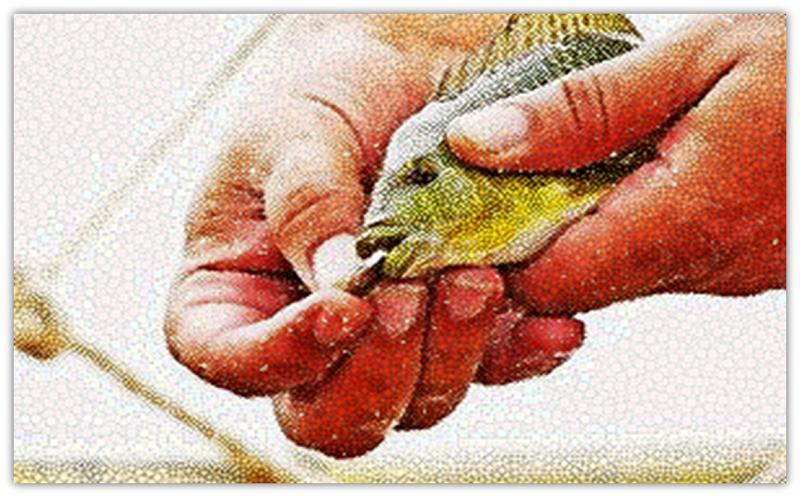
But rather than insist on His “sonship,” Jesus didn’t want to create an issue with anyone. He asked me (the commercial fisherman), to throw out a line and a hook–He told me that the first fish that I caught would have a coin in its mouth!

I must tell you that it happened exactly like He said it would.

The fish I caught had a drachma in its mouth. What can I say? It was there and it undid me. It happened and I understood again that He really did have power.

Jesus told me to pay the tax–His and mine. He knew He didn’t need to pay. Rabbis were exempt from this, and yet Jesus didn’t want to offend anyone, He paid the tax to avoid any objection.

_______________________

Bryan’s note: I’ve pondered this miracle of Jesus, and it astounds me. A fish with a coin in its mouth! But in this, He shows His power. Consider for a moment the story of Jonah where a big fish was specially created to be the vehicle for a disobedient prophet. Jesus reveals His omnipotence over all things.

Jesus is the Creator and He does this without any problem at all. He simply does it. He is God after all.

“All things were created through him, and apart from him not one thing was created that has been created.”

John 1:3, CSB

Meet Lazarus

John 11:25, 26; vv. 33-44

 25 Jesus said to her, “I am the resurrection and the life.[a] Whoever believes in me, though he die, yet shall he live, 26 and everyone who lives and believes in me shall never die. Do you believe this?” 27 She said to him, “Yes, Lord; I believe that you are the Christ, the Son of God, who is coming into the world.”

Jesus Weeps

When Jesus saw her weeping, and the Jews who had come with her also weeping, he was deeply moved[b] in his spirit and greatly troubled. 34 And he said, “Where have you laid him?” They said to him, “Lord, come and see.” 35 Jesus wept. 36 So the Jews said, “See how he loved him!” 37 

Jesus Raises Lazarus

38 Then Jesus, deeply moved again, came to the tomb. It was a cave, and a stone lay against it. 39 Jesus said, “Take away the stone.” Martha, the sister of the dead man, said to him, “Lord, by this time there will be an odor, for he has been dead four days.” 40 Jesus said to her, “Did I not tell you that if you believed you would see the glory of God?” 

 So they took away the stone. And Jesus lifted up his eyes and said, “Father, I thank you that you have heard me. 42 I knew that you always hear me, but I said this on account of the people standing around, that they may believe that you sent me.” 43 When he had said these things, he cried out with a loud voice, “Lazarus, come out.” 44 The man who had died came out, his hands and feet bound with linen strips, and his face wrapped with a cloth.

Jesus said to them, “Unbind him, and let him go.”

My name is Lazarus and I was a special “friend” of Jesus. We liked being with each other, and my sisters Mary and Martha also enjoyed fellowshipping with Him. Whenever He passed through Bethany, Jesus always had an open invitation to visit.

What’s it like to be dead? Many ask me this, and I suppose they want to understand, and I don’t blame them. To me, it seemed like a very deep sleep–but I didn’t dream. Those who look for any special insight, will not find it from me. And yet, I am His witness. He has incredible power over death.

I heard Him call my name.

It pierced through everything with an authority I’d never heard before. I had been laid in my tomb for 4 days and my physical body had begun to putrify. When they rolled the stone away the terrible smell of death lay heavy in the air.

I was tightly bound in cotton wraps and sticky spices had been applied to my body. Mary and Martha had objected to Jesus’ attempt. As I looked back I realize that their actions were justified. After all, who can give life when one is very much dead. And not only dead but well on the way on to decay. The smell wafted from my tomb.

I had heard His shout, and it was then death was reversed.

My heart and brain began to work again. When I came to I found that I was lying on a stone table and tightly wrapped in the clothes of the dead. I managed to sit up, and I shuffled toward the light that had entered the tomb by the stone that covered the door.

When Jesus saw me I believe that He was laughing. He gave the command to the shocked bystanders, He commanded them to unwrap me. I suppose that then I realized I was now in the land of the living. I can’t explain what had happened, But my grave clothes were unwrapped.

There were many that day that became believers.

Many had attested that I was most certainly dead, after all, they had attended my funeral. Some had observed that I had been slathered in the sticky ointment–fragrant spices. And a few were witnesses to see the stone rolled in place.

So many believed in Jesus’ power of resurrection that day–they were completely amazed and simply reacted to what Jesus had just done for me.

There were some who simply didn’t (or wouldn’t) believe.

There were the Pharisees and the Sadducees who wanted me dead hoping to nullify my witness and my resurrection from the dead.

Their hatred of Jesus’ ministry was only strengthened. My own resurrection proved His authority and power over even death. I was a walking and breathing miracle that they refused to accept. It got so bad that the religious leaders wanted to kill me because so many believed in my resurrection. I was a living witness to many.

Yes, I know that I’ll die again. But even now, in my second death, I’m not afraid anymore.

I had become an embarrassment to them, a constant reminder that Jesus had defeated death.

He alone can believe in immortality who feels the resurrection in him already.

Frederick W. Robertson

But some of them went away to the Pharisees and told them the things Jesus did. Then the chief priests and the Pharisees gathered a council and said, “What shall we do? For this Man works many signs. If we let Him alone like this, everyone will believe in Him, and the Romans will come and take away both our place and nation.”

John 11:53-54

Art: blogspot.com. Scripture: Christian Standard Bible, Holman Publishers; The Message, Eugene Peterson

Encountering the Feeding of the 5000

Luke 9:12-17

As the sunset, the Twelve said, “Dismiss the crowd so they can go to the farms or villages around here and get a room for the night and a bite to eat. We’re out in the middle of nowhere.”

“You feed them,” Jesus said.

They said, “We couldn’t scrape up more than five loaves of bread and a couple of fish—unless, of course, you want us to go to town ourselves and buy food for everybody.” (There were more than five thousand people in the crowd.)

But he went ahead and directed his disciples, “Sit them down in groups of about fifty.” They did what he said and soon had everyone seated. He took the five loaves and two fish, lifted his face to heaven in prayer, blessed, broke, and gave the bread and fish to the disciples to hand out to the crowd. After the people had all eaten their fill, twelve baskets of leftovers were gathered up.

Jesus had been healing many. Five thousand people sat enraptured by Jesus’ teaching. It was like nothing they had never heard before. It was definitely a testimony to Jesus’ fantastic presence. Where the all came from, I haven’t the slightest. To gather a crowd like this, in the middle of nowhere was amazing. None of us had ever heard of this ever happening.

Seventy of us had just returned from preaching ourselves, with stories of deliverance and healing. Herod had also heard, and that was a bit spooky. We certainly didn’t want his scrutiny, that’s for sure-I know he known about us.

It was getting dark and, quite honestly, we realized that we had a problem. We met with Jesus and expressed this development. We really didn’t have a solution. It came as a shock to us (and maybe absurd) that He told us to “feed them.”

The crowd concerned us.

After a search, we came up with five loaves and a few fish. We wanted Jesus to see the absurdity of this, and to emphasize the problem. Perhaps this meager discovery would help Him understand,

Jesus told us to reseat the crowds in groups of fifty, I’ve always wondered about that, but I suppose that He wanted to see the size of the crowd–and to oversee a better and more even distribution of the food. That was indeed wisdom, but it was far more than that.

He covered His head, looked to heaven to give thanks.

He then began to take the fish and bread to distribute to the crowds. I still don’t quite grasp what exactly happened. It still seems absurd.

The bread and fish just kept coming.

As we filled our baskets, the food never ran out! It just kept coming and coming! Our baskets were always full, and all 5000 were fed. As a matter of fact, everyone had more than they wanted–all from a measly five loaves and two fish!

And to emphasize all of this, each of us had our own baskets filled.

What happened then and there staggered us. Obviously, on a purely rational level, it was quite impossible. Surely Jesus had the ability to do anything He wanted to do. This miracle only confirmed the absolute power of Jesus–each of us had a full basket for ourselves. Jesus had made it clear that He was in full control of every situation.

Even now, how can we ever doubt Him?

“Don’t be afraid, little flock, because your Father delights to give you the kingdom.

Luke 12:32

For further reading: “Meet the Master of Ceremonies in Cana

Art is public domain, the passage is taken from The Message Bible by Eugene Peterson.

Mastered by Jesus

“A Christian is not a person who believes in his head the teachings of the Bible. Satan believes in his head the teachings of the Bible!”

“A Christian is a person who has died with Christ, whose stiff neck has been broken, whose brazen forehead has been shattered, whose stony heart has been crushed, whose pride has been slain, and whose life is now mastered by Jesus Christ.”

–John Piper

No longer do I call you servants, for a servant does not know what his master is doing; but I have called you friends, for all things that I heard from My Father I have made known to you.”

John 15:15

It seems that the purpose of life is not to find our freedom. It’s really meant to find our Master.

Yes, the idea of being a slave to anyone is repugnant. We chafe at this, and yet man was never meant to be seperated from the Lordship of Jesus. We’re instructed repeatedly with the New Testament idea that “our life is not our own”  Over and over God proclaims Himself as the King.

That troubles us somewhat.

Not so much when life is fairly good, granted, but in those hard moments when a decision must be made between enjoying the titillating “lusts of the flesh,” or accepting the fruits of the Spirit. This is one of those “lordship moments.” They come, and go, and they show us exactly who we are.

If you’re really going to be authentic–a legitimate and real disciple, then you must determine who is going to be “boss.” This isn’t one of those casual decisions. You must securely fix it in your heart.

Your decision must become a settled issue.

The thief on the cross knew salvation, he was promised an eternity with God simply by faith. But I submit to you that he had put himself under the Lordship of Jesus, simply by recognizing the sign, “the King of the Jews.” I believe he saw and understood its imlications. Jesus was King!

This is a very hard word for some, but many of our personal issues hinge on this.

I know this first-hand. It can be a monumental struggle. You must admit to not only having Jesus as your Savior, but you also must put your life under His total Lordship.  You need to pick up your cross daily in order to follow.  You need to learn how to kneel.

I’ve chosen a crown to open up this post–it’s done on purpose.  I simply want you to to understand the supreme call He has on your life. Here’s Bob Dylan, and he nails this idea down:

But you’re gonna have to serve somebody, yes indeed
You’re gonna have to serve somebody
Well, it may be the devil or it may be the Lord
But you’re gonna have to serve somebody

You must learn here and now how to kneel before the Sovereign King


Related: “Am I Like Peter”; “The Scum of the Earth;” “Those Strange Christians.”