Meet the Man at the Pool

John 5:1-9

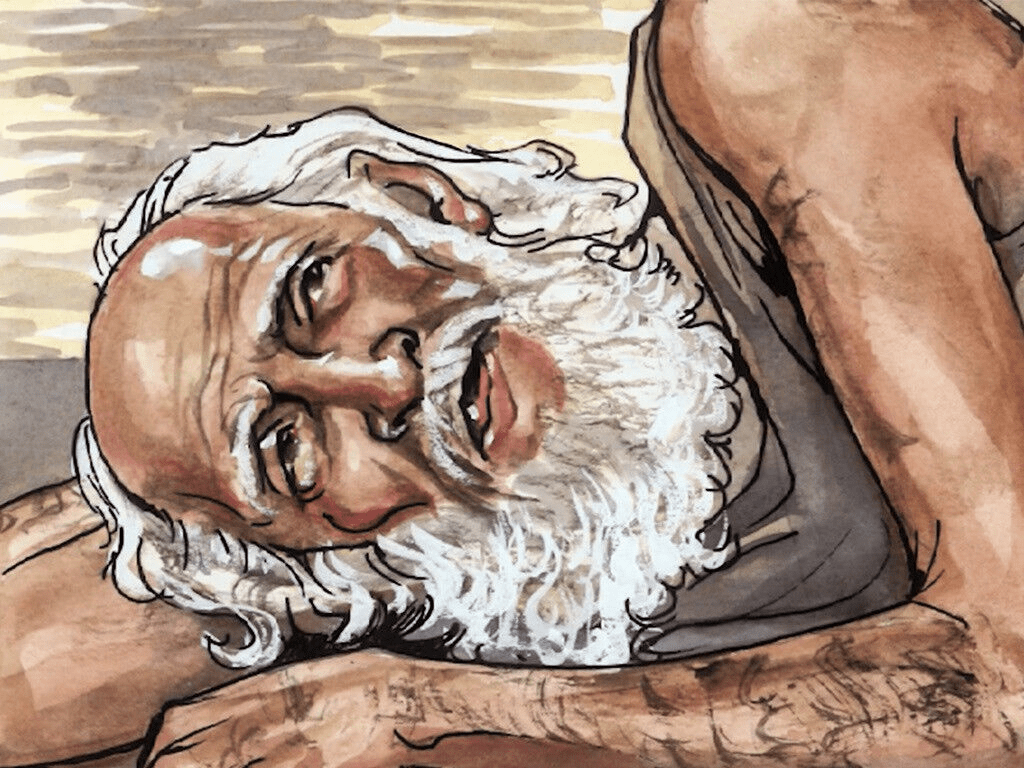
1-6 Soon another Feast came around and Jesus was back in Jerusalem. Near the Sheep Gate in Jerusalem there was a pool, in Hebrew called Bethesda, with five alcoves. Hundreds of sick people—blind, crippled, paralyzed—were in these alcoves. One man had been an invalid there for thirty-eight years. When Jesus saw him stretched out by the pool and knew how long he had been there, he said, “Do you want to get well?”

The sick man said, “Sir, when the water is stirred, I don’t have anybody to put me in the pool. By the time I get there, somebody else is already in.”

8-9 Jesus said, “Get up, take your bedroll, start walking.” The man was healed on the spot. He picked up his bedroll and walked off.

9-10 That day happened to be the Sabbath. The Jews stopped the healed man and said, “It’s the Sabbath. You can’t carry your bedroll around. It’s against the rules.”

There were hundreds of us, surviving in our own personal man-made hell. We were the blind and the lame; simply dropped off by our families here to exist, to somehow make it on our own. We were a desperate lot, but there was a strange camaraderie, we all understood that our condition was hopeless. We were just marking time–and my 38 years was a lifetime for some. It’s a very long time to be sick.

None of us were whole, not by a long shot, otherwise, why were we sitting here waiting to die?

It’s said by some that an angel would venture down from heaven, and stir the pool–and the first to get in the water would be healed. It was one of those strange things that kept us from going crazy–a mental mechanism that bruised hearts often carry deep inside. It was a necessary way to keep from being lost.

I lived with my friends on these hard stone steps all these years, I’ve seen some live, and many more die. Banding together we became a community of survivors. We understood each other, and we knew everyone’s story–what else was there to do but talk?

It’s funny how some ideas get started–a silly dream, or a fairy tale of leaving this pool and becoming normal again. We developed the knack of a gallows kind of humor, a bond that condemned men shared with each other. We bantered these in order to cope with this slow-motion death. These were inside jokes, mixed with hefty dollops of half-believed hope and odd humor that only dying men learn to appeciate.

But maybe it kept us alive for just one more day. Perhaps it helped us to survive this hell.

That day started like 13,879 days before, and there was nothing unusual about it. There was nothing but the growing heat, the flies, and the sour smell of unwashed bodies. But in an instant, my life was going to be decisively interrupted. And at the time I never saw it coming.

Jesus threaded His way through the sitting bodies to find me.

When our eyes met he stopped. All He did was to ask me simply— “Do you want to be made well?” That question cut through the many years of accrued pain. I mumbled something about the angel, and the pool, and not having anyone to help me into the water. His question pretty much unraveled me. It seemed like it was just Him and me, staring at each other.

He told me to stand, to pick up my mat, and walk.

All of those half-baked days of a wasted life crashed in on me then. I saw all the emptiness and sadness of 38 long years. But in an instant, He healed me. I stood and picked up my mat, I shook my head and cried. Through my tears, I saw my friends looking at me in shocked and total amazement.

I simply walked out of there, carrying the only thing I owned.

“Then the lame will leap like a deer,
and the tongue of the mute will sing for joy,
for water will gush in the wilderness,
and streams in the desert.”

Isaiah 35:6, CSB

Art: Free Bible Images, text used is from The Message, a translation by Eugene Peterson

Meet the Man Born Blind

John 9:1-7

As he was walking along, he saw a man blind from birth.

“Master,” his disciples asked him, “why was this man born blind? Was it a result of his own sins or those of his parents?”

“Neither,” Jesus answered. “But to demonstrate the power of God. All of us must quickly carry out the tasks assigned us by the one who sent me, for there is little time left before the night falls and all work comes to an end. But while I am still here in the world, I give it my light.”

Then he spat on the ground and made mud from the spittle and smoothed the mud over the blind man’s eyes, and told him, “Go and wash in the Pool of Siloam” (the word Siloam means “Sent”). So the man went where he was sent and washed and came back seeing!

Up to now I’ve tried to approach these posts from the first person viewpoint. I hoped to understand those who met face-to-face with Jesus. I wanted to grasp what they were seeing through their own eyes. But I intend with this post to revert back to a more traditional approach to this passage.

First, we’re introduced to a man who is blind from birth.

I can’t even imagine what that would be like (just as he probably could imagine having sight). I’ve been told that he probably didn’t have a “dream” life–that requires having seen images (a dog, a tree, a mean person) and this wasn’t available to him. He never saw the color red, or seen a mountain. (He didn’t have the circuitry.)

I suppose we can only imagine what blindness like this would be.

Somehow I’ve come to an idea that this represents fallen men–we’re spiritually blind to the workings and truths of Jesus’ Kingdom. It seems a pretty good explanation of each of us–“blind from birth.”

Secondly, notice the response of the disciples who first met this unfortunate man. They don’t see his needs, rather they want to know the theology behind this. Perhaps that’s how we respond much of the time–we don’t see the needs, we only want to know the reasons. We’re not wise or discerning enough to see what’s going on–in short we’re not equipped to love or show mercy. (We haven’t got the circuitry.)

Perhaps this is how we operate as immature Christians.

We don’t engage the need, but rather we like having great theology over understanding compassion. If we really don’t love needy people, we miss so much. We don’t ever grow up. It’s easy to philosophize–it’s hard to get down and serve and really love others.

It’s funny but Jesus declares Himself to be the light of the world while speaking to the man who is born blind.

Third, we discover the gentle mercy that Jesus has when He meets needy people. Now the Lord does accommodate His followers, but not at the expense of engaging the need of the moment. Jesus is full of compassion–most especially when He meets broken people–and as His followers, we must grasp this.

Good theology is not the primary calling of Jesus’ followers.

As I mature in Christ I’m learning (slowly) that people are His real focus. He has come, not to theologize or philosophize, but to meet needs! Sure the reasons why become clearer, but that really isn’t Jesus’ primary goal. People are, not having impeccable theology.

Classes in systematic theology are good, but soup kitchens are better.

The miracle happens, and Jesus’ love and desire to restore this man is ‘front and center.’ The Lord’s methodology is interesting. Spit and mud, wiped on the blind man’s eyes. In Genesis we discover that God made man out of dirt and dust of the ground. Perhaps what He’s doing here mirrors that work.

And it’s also important to understand that Jesus never performs the exact same healing in the exact same way. For some reason He ‘tailors’ His work to the individuals deepest need. I suppose He doesn’t want us to grab a hold of a formula, as that’s what we want to have.

The story is primarily about a blind man’s healing.

It’s not theology, and it certainly isn’t about what is proper and acceptable. We really must understand this, and we really need to understand the tremendous mercy and power of God to both heal and restore.

There’s a ton more here we can extract, but I suppose there isn’t time. This is merely my take on John 9.

The Spirit of the Lord is upon me; he has appointed me to preach Good News to the poor; he has sent me to heal the brokenhearted and to announce that captives shall be released and the blind shall see, that the downtrodden shall be freed from their oppressors, and that God is ready to give blessings to all who come to him.”

Luke 4:18

Image: MCCC. Text from the “Living Bible,” published by Tyndale House

Meet the Gentile Woman

Matthew 15:21-28

Jesus then left that part of the country and walked fifty miles to Tyre and Sidon.

22 A woman from Canaan who was living there came to him, pleading, “Have mercy on me, O Lord, King David’s Son! For my daughter has a demon within her, and it torments her constantly.”

23 But Jesus gave her no reply—not even a word. Then his disciples urged him to send her away. “Tell her to get going,” they said, “for she is bothering us with all her begging.”

24 Then he said to the woman, “I was sent to help the Jews—the lost sheep of Israel—not the Gentiles.”

25 But she came and worshiped him and pled again, “Sir, help me!”

26 “It doesn’t seem right to take bread from the children and throw it to the dogs,” he said.

27 “Yes, it is!” she replied, “for even the puppies beneath the table are permitted to eat the crumbs that fall.”

28 “Woman,” Jesus told her, “your faith is large, and your request is granted.” And her daughter was healed right then.

“Please Lord Jesus, there is no one else who can rescue me!”

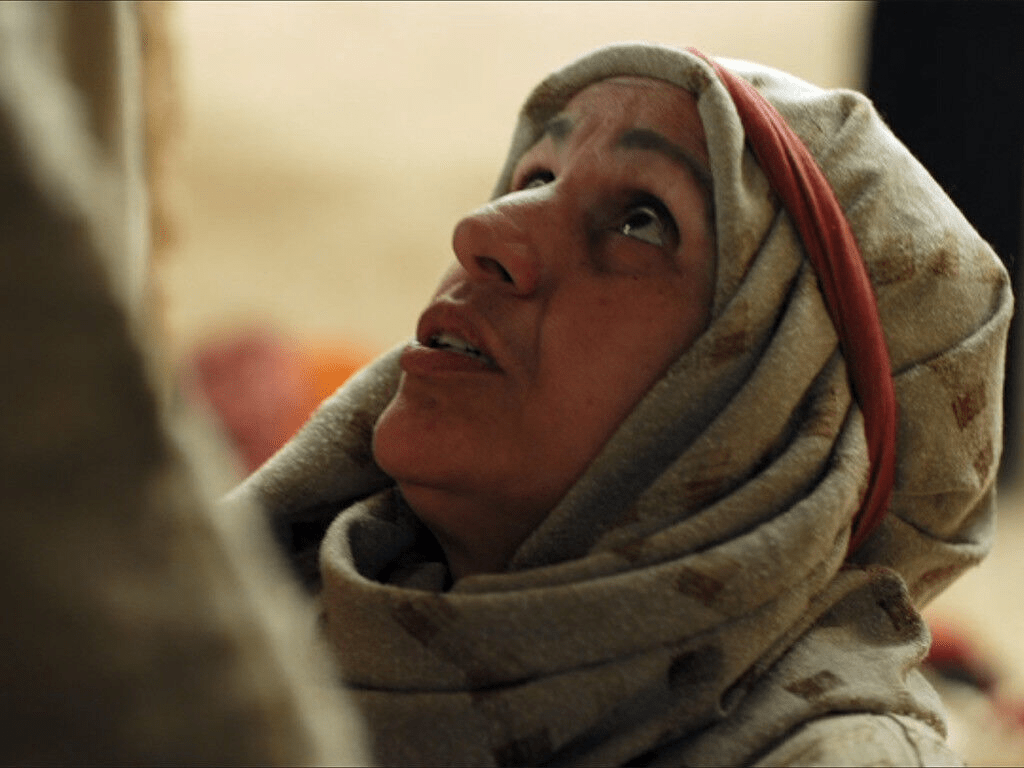
I believe that Jesus must’ve come just for me. He had made a long trip to the Gentile cities of Tyre and Sidon to find me, a pagan woman, despised by the Jewish people. I mustn’t forget that. He came for me, he reached out for my daughter and myself.

My daughter had a demon living inside her.

I knew this, and I also knew that no power on earth could rescue her–but Jesus could. I begged and I worshiped, I learned that this combination goes together like peas and carrots. You see, my daughter was possessed, filled with a satanic entity that was taking over to destroy her, I would do anything to set her free.

I was ‘blocked’ by Jesus’ followers, perhaps they didn’t understand. And yet I knew that they weren’t my obstacles, but I needed to push right through them–perhaps this is sometimes true of those who call themselves disciples. They wouldn’t let me see Jesus. And yet I had to bring her desperate need to Him.

There was no one else.

I begged and pleaded, and yet they refused me. Over and over I tried to see Jesus, to bring my terrible need to Him–the healer, the teacher—the One who worked miracles for undeserving people. I was coming to Him, not for myself but for my daughter.

It was then saw me. When He spoke it seemed that it was a hard word. He had been sent to the lost sheep of Israel, not to Gentiles like me.

But I didn’t stop pleading, I knew I was undeserving. I wasn’t righteous and I certainly didn’t belong. Trust me, I had no merit, no real right to come to Him. I had nothing, definitely not a holy life. I had zero and I knew it.

But I remembered my daughter, picking flowers and making ‘daisy chains.’ The way she used to be–she was innocent and so gentle. But recently something dark had taken over, and she had changed.

Jesus met me.

The words he spoke challenged me. “I’ve come exclusively for the children of Israel.” I understood, and yet I insisted–I fell down on my knees and saw His dirty feet; He had traveled very far. I began to worship Him. He seemed almost contemplative. “I don’t think it right to take what I can offer, and “give it to the dogs.'” But even then I insisted. He alone can heal her, there were no others.

I pleaded with Him, “even dogs can eat what falls off the table.” I may have stuttered. Jesus then spoke to me, and maybe the others. “I see that you have a large faith. I give you what you’ve asked.” And at that very instant my daughter was healed.

————————-

“Lord, help me.”

“I commend this prayer to you because it is such a handy prayer. You can use it when you are in a hurry, you can use it when you are in a fright, you can use it when you have not time to bow your knee. You can use it in the pulpit if you are going to preach, you can use it when you are opening your shop, you can use it when you are rising in the morning. It is such a handy prayer that I hardly know any position in which you could not pray it: ‘Lord, help me.’”

Charles Spurgeon

Art by Free Bible Images: the text is from the Living Bible